
I need a first itinerary shape
Start with route logic, pacing, booking pressure, and the minimum number of stops that still gives the province real depth.
Best for first-timersClear next clicksLower booking risk
See the starter
Discover Gansu is a planning-first field guide for foreign travelers who want route clarity, better pacing, and a more grounded sense of what the province actually feels like beyond a generic Silk Road loop.
Trip planning at a glance
The strongest Gansu trip usually starts with route shape, then execution detail, then focused help on the final draft.
Best if the province still feels broad and you need route shape before booking trains and hotels.
Open the starter
Use the guide library once you know which stops are likely making the cut and need stronger execution notes.
Browse planning guides

Use the route planner or contact form when dates are fixed and the route needs a grounded second opinion.
Try the planner
days most routes work best
anchor stops worth shaping around
clear first actions for new users
province-wide corridor that stays coherent
Instead of asking everyone to read the same page in the same order, the site points first-time travelers, planners, and draft-itinerary users toward the most useful first action.
Start with route logic, pacing, booking pressure, and the minimum number of stops that still gives the province real depth.
Use the destination and guide library when you know the places but still need better timing, transport logic, and detour value.
Send your dates or draft route when you want practical feedback on stop order, pacing, and likely friction points.
The appeal is not only in the landmarks. It is in how cave art, Hui food culture, Tibetan ritual life, Yellow River city scenes, and long-distance movement all hold together in one route.
For first-time visitors, Gansu is easier to understand than it looks on the map: one long travel spine, a clear set of anchor stops, and enough standout sights to justify the transfers between them.

A strong Gansu trip can move from Lanzhou's Yellow River neighborhoods to the Hexi Corridor, then out toward grottoes, fortresses, grasslands, and Tibetan towns without the route falling apart.

Morning noodle shops, Hui tea houses, prayer circuits before breakfast, and county-town meal stops are not side notes here. They are part of what makes the province feel inhabited rather than staged.
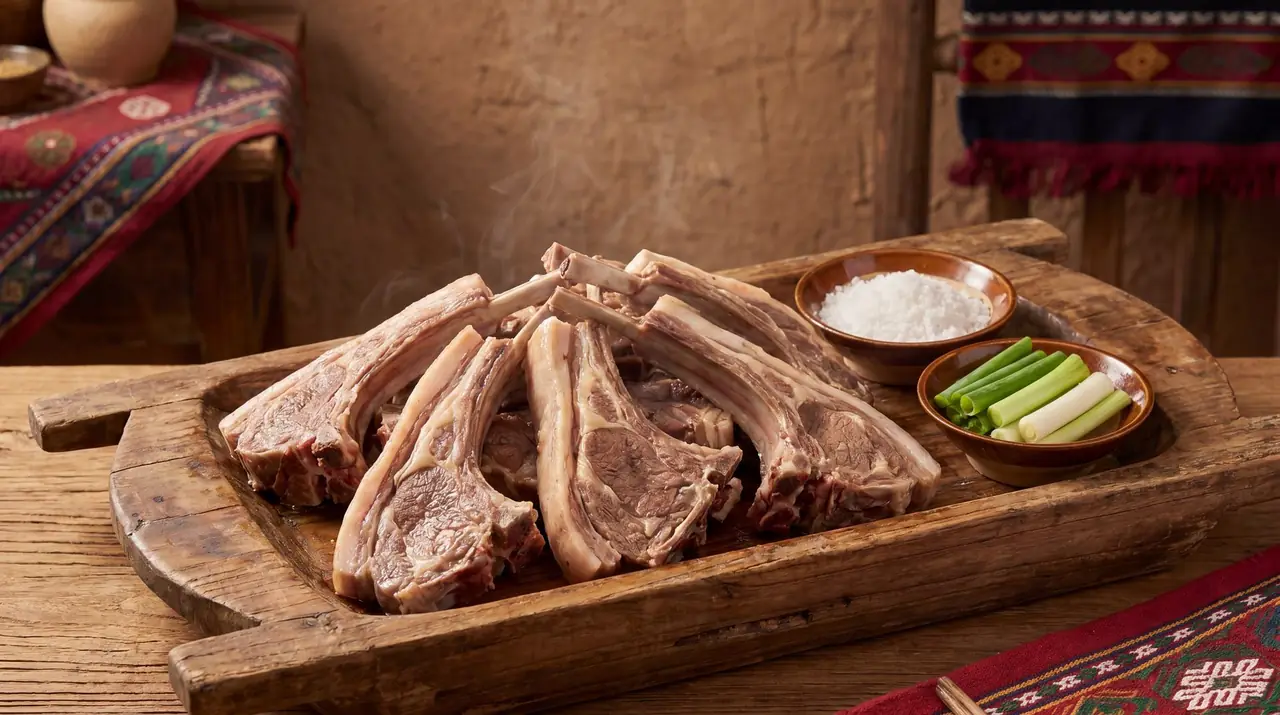
Lanzhou beef noodles are only the entry point. The stronger story is the Hui Muslim food system that shapes breakfasts, hand-pulled noodles, tea, grilled lamb, banmian, and what people actually eat on the road.
Jiayuguan, Mogao, Maijishan, Labrang, and the older desert passes make the province feel like a corridor of movement, religion, defense, translation, and exchange rather than a stack of isolated attractions.

You still need to book the key sites, but much of Gansu rewards travelers who want space, older neighborhoods, longer rail sections, and time to let the route unfold instead of sprinting through it.
These are the stops that shape most successful first routes through Gansu, whether you only have five days or enough time to build a slower province-wide run.
Ancient Buddhist cave temples with exquisite murals and sculptures along the Silk Road.
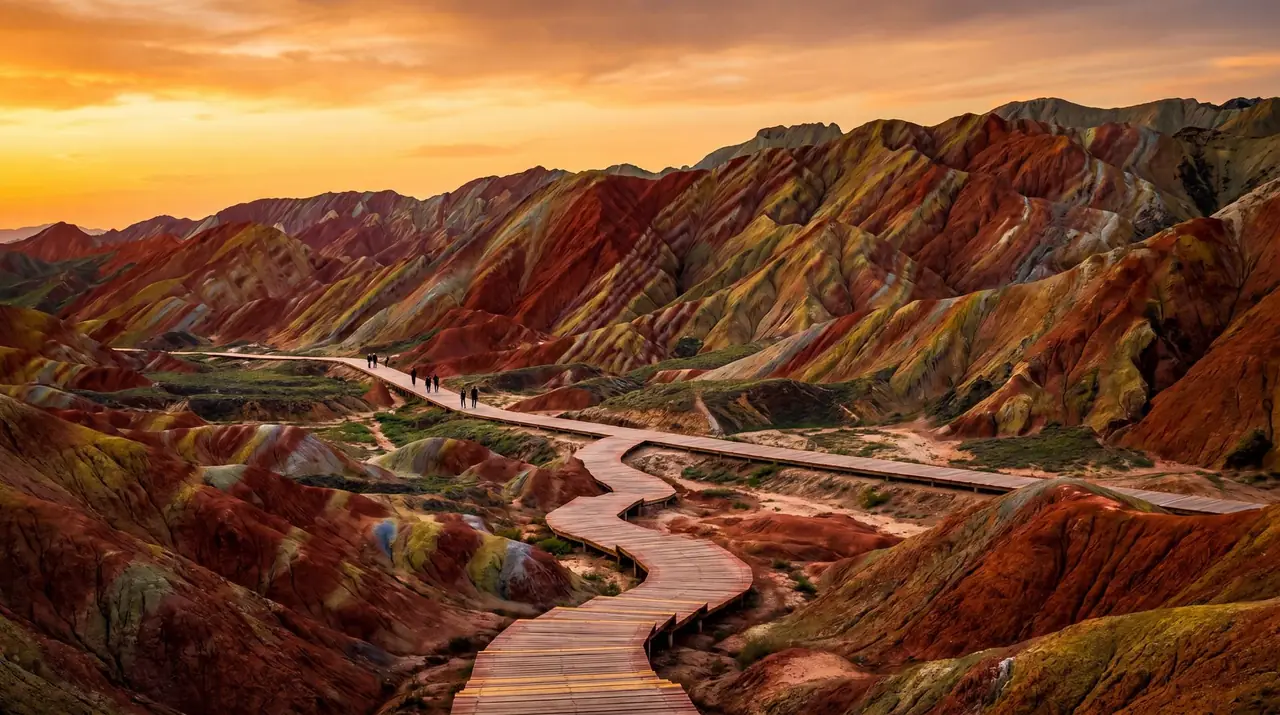
Breathtaking colorful mountain formations known as Rainbow Mountains.
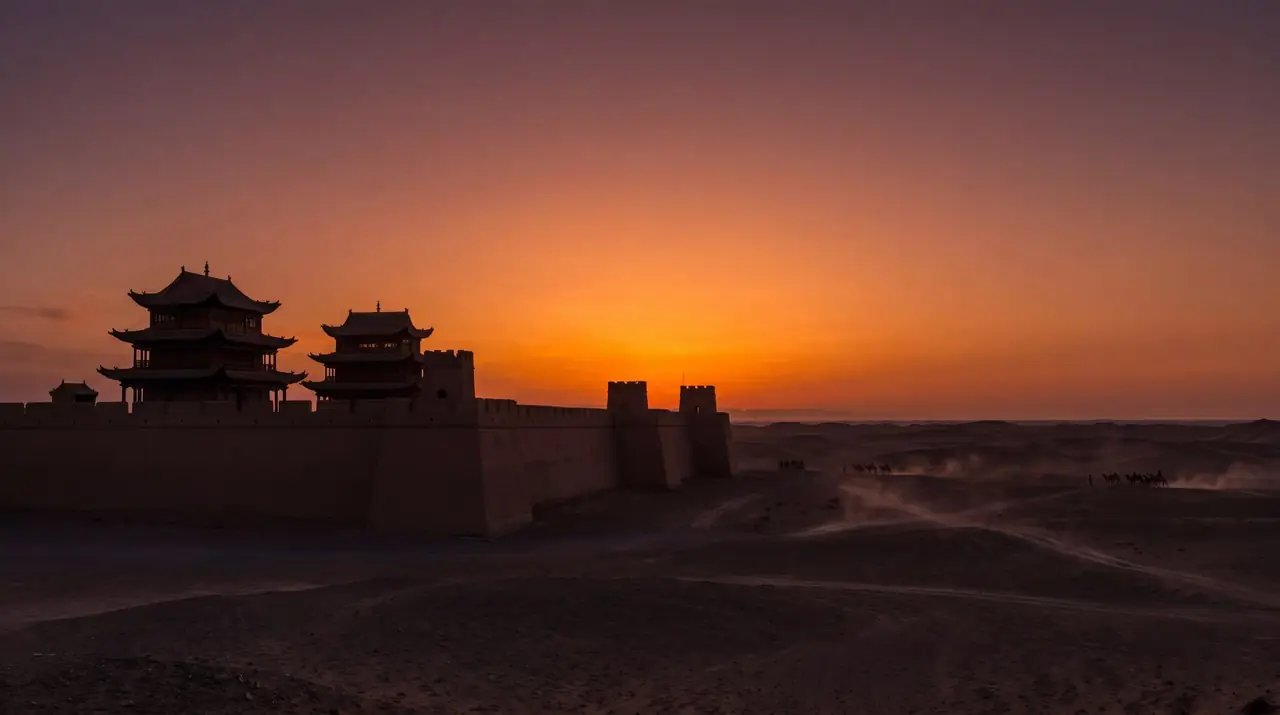
The westernmost end of the Great Wall, known as the Greatest Pass Under Heaven.
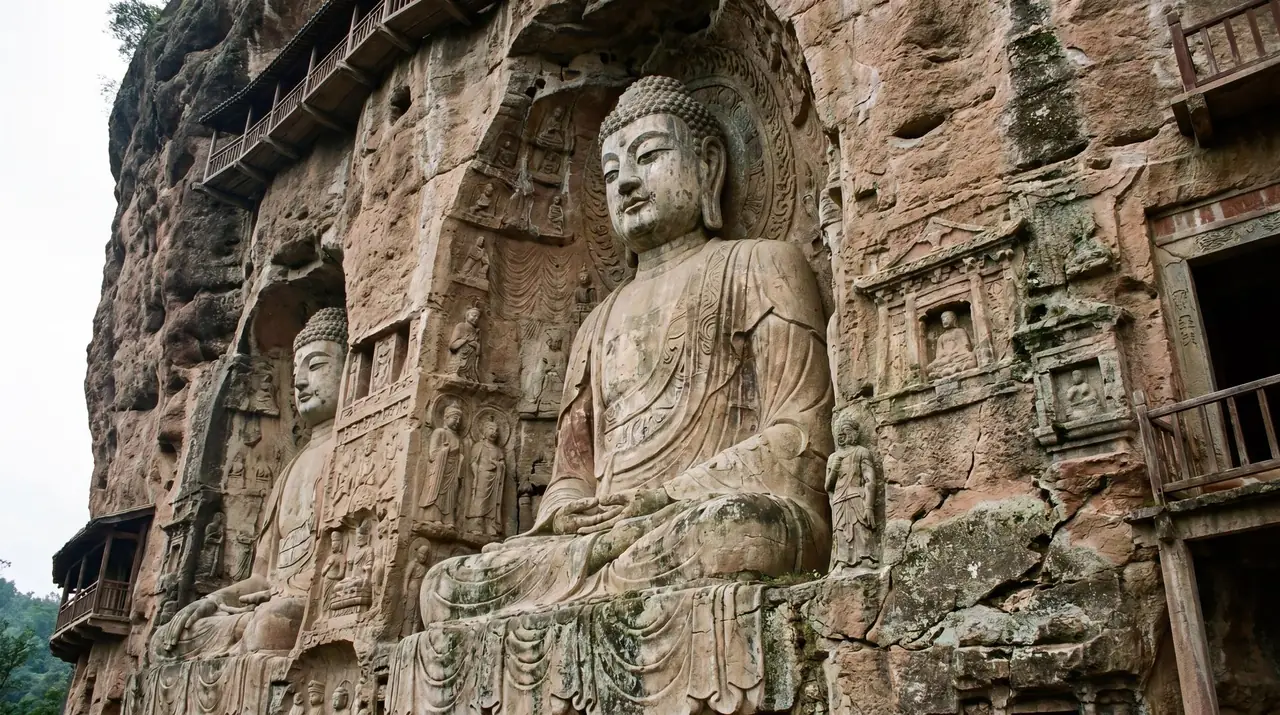
Dramatic cliff-carved Buddhist grottoes with thousands of ancient sculptures.
This is the working layer of the site: ticket timing, layover logic, food detours, monastery etiquette, and the decisions that matter more than another generic list of attractions.
Booking Guide
Mogao is one of the few places in Gansu where poor booking timing can genuinely weaken the trip, so it is worth planning this stop properly.
Destination Strategy
Tianshui is not the province's headline city, but Maijishan makes it one of the smartest detours for travelers who care about cave art and quieter historical sites.
City Itinerary
Lanzhou is more than a transfer node. One solid day is enough to understand why the city matters to the province.
Gansu food makes more sense once you understand the Muslim neighborhoods, breakfast rhythm, tea culture, and the road-food logic behind what travelers actually end up eating between major sites.
This is not the "Lanzhou beef noodles" you have had outside China — those are usually a pale imitation. The real thing is a masterclass in simplicity: hand-pulled noodles (you choose the thickness, from hair-thin to belt-wide) in a bone broth that has simmered for hours, topped with just a few slices of beef, radish, chili oil, and herbs. The best shops have lines out the door by 7 AM and sell out by noon. Do not expect a comfortable dining room; expect perfection in a bowl for under $2.
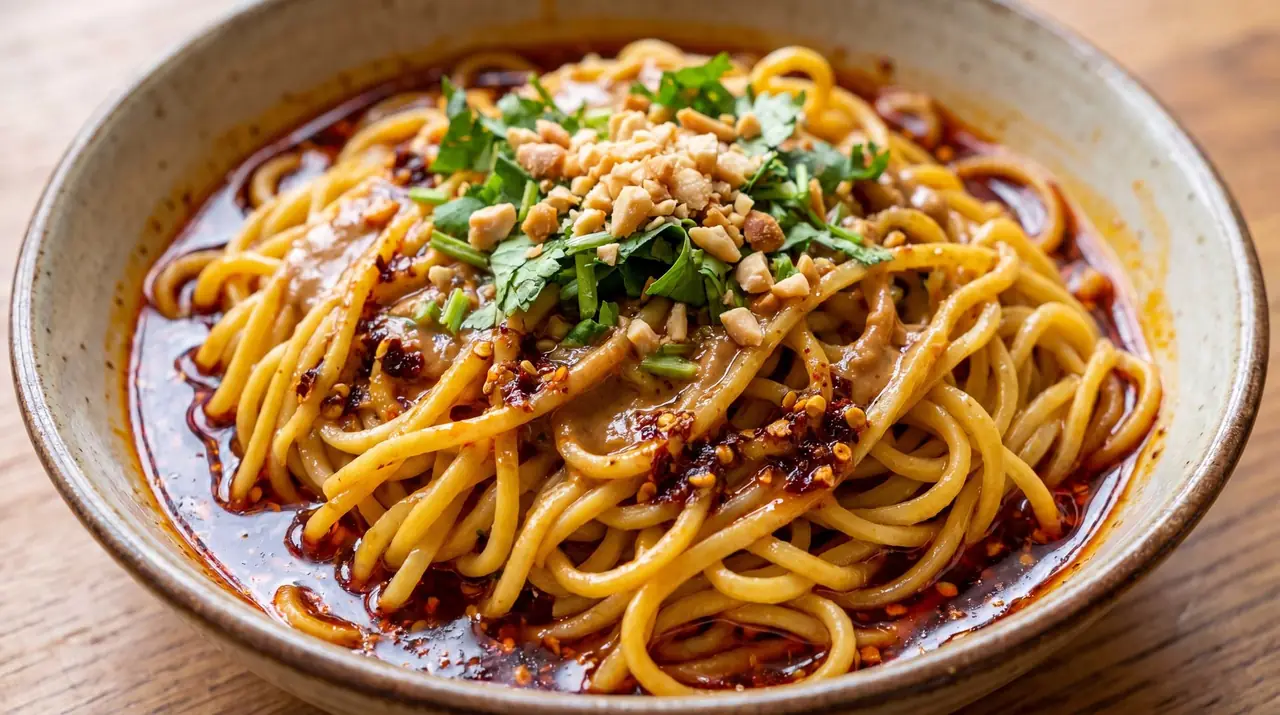
Niangpi is the dish you will crave on a hot Gansu afternoon. It is essentially cold "skin" noodles — chewy, translucent sheets made from wheat or rice flour, dressed with a punchy sauce of vinegar, garlic, chili oil, and sesame paste. It is refreshing, deeply savory, and surprisingly filling. Street vendors sell it from carts all over Lanzhou, and the quality is remarkably consistent. A perfect counterpoint to the heavy noodle soups that dominate local cuisine.
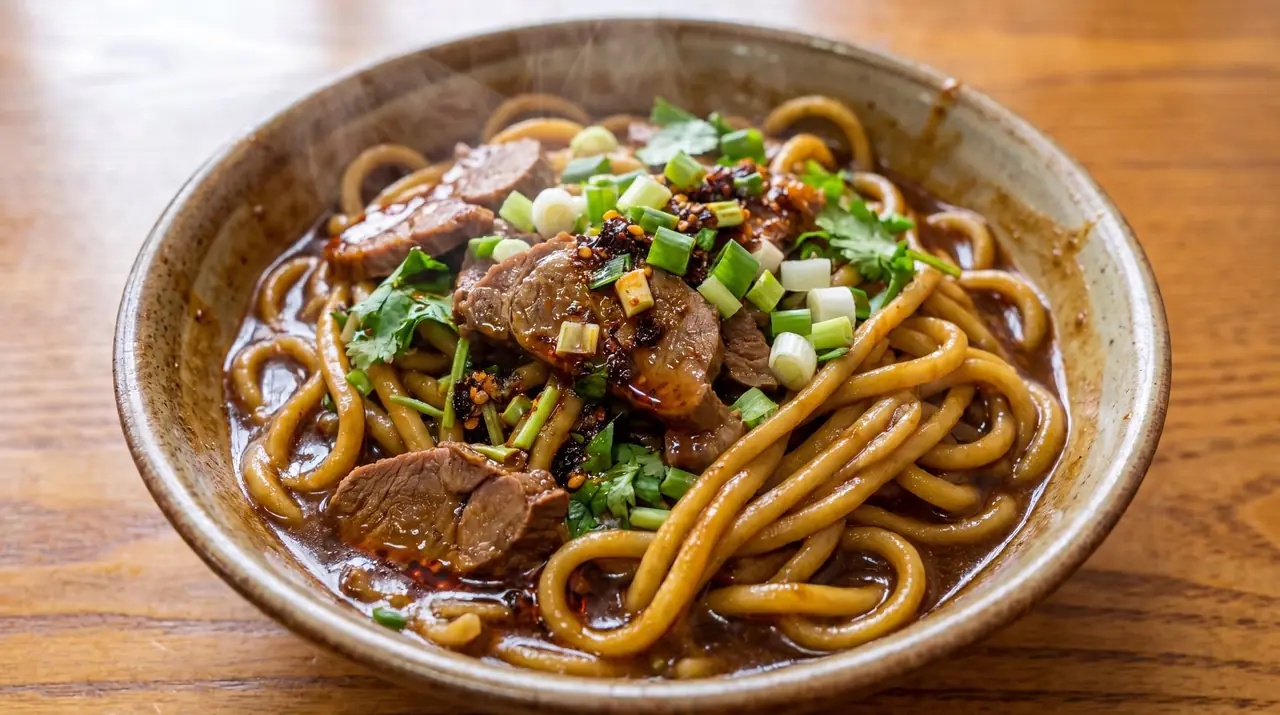
This is one of Dunhuang's more local, less exported comfort foods: springy yellow noodles topped with tender donkey meat, often with a broth or sauce that feels heavier and more road-town practical than Lanzhou's clean beef noodle style. It is the sort of dish that makes more sense after a dusty day between caves, dunes, and long station transfers. You are not eating it for elegance. You are eating it because it is warming, filling, and tied to a specific desert-town appetite.
Not fake review blocks. Just the recurring truths of a good Gansu trip: the town texture, the practical encounters, and the way the province slows down once you stop treating it like a checklist.
A trip starts making sense when you notice the noodle rooms, side streets, prayer flags, mosque districts, truck stops, and tea houses between the famous names.

Foreign travelers remember the small operational help: station staff pointing you to the right gate, restaurant owners switching to picture menus, hotel desks writing addresses in Chinese.
Gansu gets better once you stop trying to consume it like a checklist. The route starts to land when you give space to dawn light, station time, evening river walks, and breakfast before the buses arrive.
Start here for the questions that usually block a trip from moving forward: timing, transport, internet, costs, and what first-time foreign visitors need to prepare before arrival.
Top Sights
What is Gansu famous for?
Gansu is best known for the Mogao Caves (a thousand years of Buddhist art), Zhangye's Rainbow Mountains (those viral photos are real), and the western end of the Great Wall at Jiayuguan. But the province is also fascinating for its cultural diversity — Tibetan monasteries, Hui Muslim cities, and Silk Road ruins that most travelers never see.
Trip Length
How many days do I need to visit Gansu?
For the classic Silk Road highlights (Lanzhou → Zhangye → Jiayuguan → Dunhuang), 7-8 days is comfortable. Add 3-4 days if you want to include southern Gansu's Tibetan areas around Labrang Monastery. Two weeks lets you see everything at a relaxed pace with time for unexpected detours — and there will be unexpected detours.
Safety
Is Gansu safe for tourists?
Yes, very safe. Violent crime against tourists is virtually unheard of. The main risks are environmental — altitude sickness in the south, dehydration in the desert, and sunburn everywhere. Petty theft exists in crowded markets, but no more than anywhere else. The ethnic tensions you may have read about are not something tourists encounter in daily travel.
Transport
What is the best way to travel around Gansu?
High-speed trains are excellent for the main east-west route. For the classic Silk Road itinerary, many travelers fly Lanzhou to Dunhuang and work their way back by train. For southern Gansu's Tibetan areas, hiring a car with a driver is almost essential — public buses exist but are infrequent and signage is Chinese-only. A driver costs roughly 600-800 yuan per day including fuel.
Visa Rules
Do I need a special permit to visit Gansu?
No. A standard Chinese tourist visa (L visa) is all you need for all of Gansu, including the Tibetan areas around Xiahe. The only exception is if you plan to continue into the Tibet Autonomous Region itself — that requires a Tibet Travel Permit, which is a separate and more complicated process.
Food
What should I eat in Gansu?
Start with Lanzhou beef noodles — the real thing bears almost no resemblance to what passes for it abroad. Try niangpi (cold skin noodles) on a hot day, mutton kebabs from a street grill, and Hui banmian for a heartier meal. In the Tibetan south, yak butter tea is worth trying once, and the fresh yak yogurt is genuinely delicious. Vegetarians can find options, but meat dominates the local cuisine.
A July route is not a November route. A solo trip is not a family trip. These pages help you match the right stops to the right conditions instead of forcing a one-size-fits-all plan.
What each season actually feels like — light, crowds, trade-offs, and which months to aim for.
January through December, with honest notes on weather, crowds, and which stops work when.
Route plans for 3, 5, and 7 days built around real transfer times and practical pacing.
How the route changes for solo travelers, couples, families, seniors, and more.
These guides cover the practical decisions that generic overviews skip: hotels, transport, packing, timing, and the mistakes most people only catch after they have already booked.
Planning Guide
What to expect, what to prepare, what usually surprises first-time visitors — and what to ignore.
Planning Guide
City-by-city hotel strategy: neighborhoods, price tiers, foreigner registration, and what to actually expect.
Planning Guide
Real travel times, train vs car vs bus decisions, and how to move through the province efficiently.
Planning Guide
Month-by-month temperature and crowd data, the booking windows that matter, and honest seasonal trade-offs.
Planning Guide
A packing list built around Gansu's four conditions: dryness, sun, temperature swings, and dust.
Planning Guide
The predictable planning errors that weaken first trips — route design, booking, and on-the-ground mistakes.
Tell us how many days you have, whether you care most about cave art, food, monasteries, or stronger local texture, and we will help shape a route that fits the real pace of the province.
Best fit if you already know your dates, route draft, or must-keep stops.