Food that explains the province
Gansu food is not just a checklist of famous dishes. It is one of the clearest ways to understand Hui Muslim cities, Tibetan highlands, and the everyday rhythm of travel across the province.
Start with the dishes that still feel tied to place
These are the foods that most clearly reward eating them in Gansu rather than just reading about them.

Lanzhou Beef Noodles
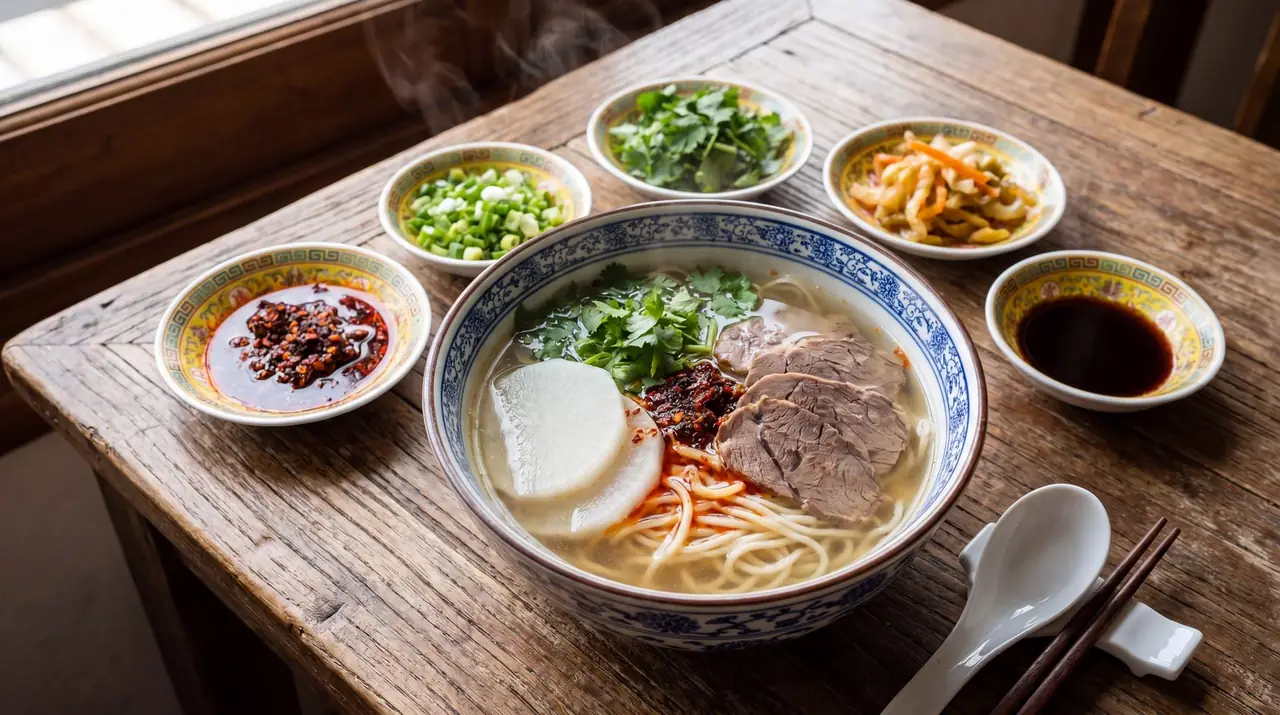
NoodlesThis is not the "Lanzhou beef noodles" you have had outside China — those are usually a pale imitation. The real thing is a masterclass in simplicity: hand-pulled noodles (you choose the thickness, from hair-thin to belt-wide) in a bone broth that has simmered for hours, topped with just a few slices of beef, radish, chili oil, and herbs. The best shops have lines out the door by 7 AM and sell out by noon. Do not expect a comfortable dining room; expect perfection in a bowl for under $2.
Where to try it
Mazilu Beef Noodles — the most famous, and deservedly so
Jingning Road Noodle Street — shop around and find your favorite
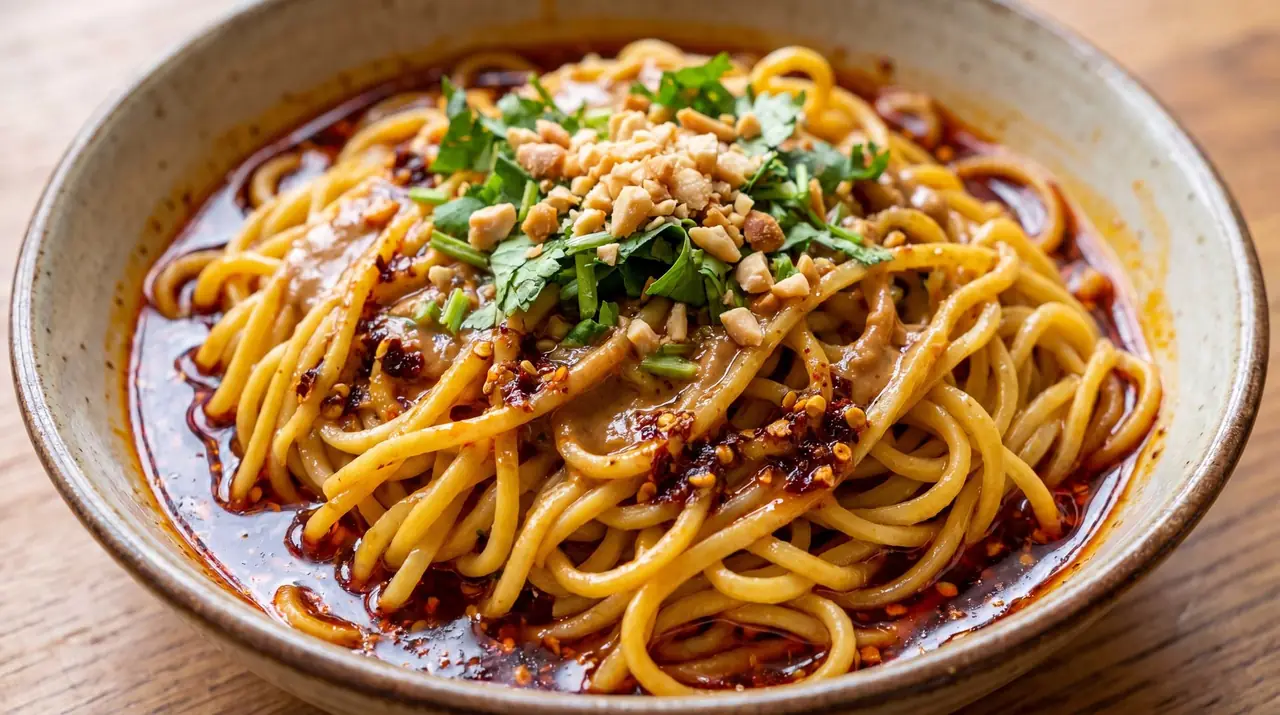
Niangpi
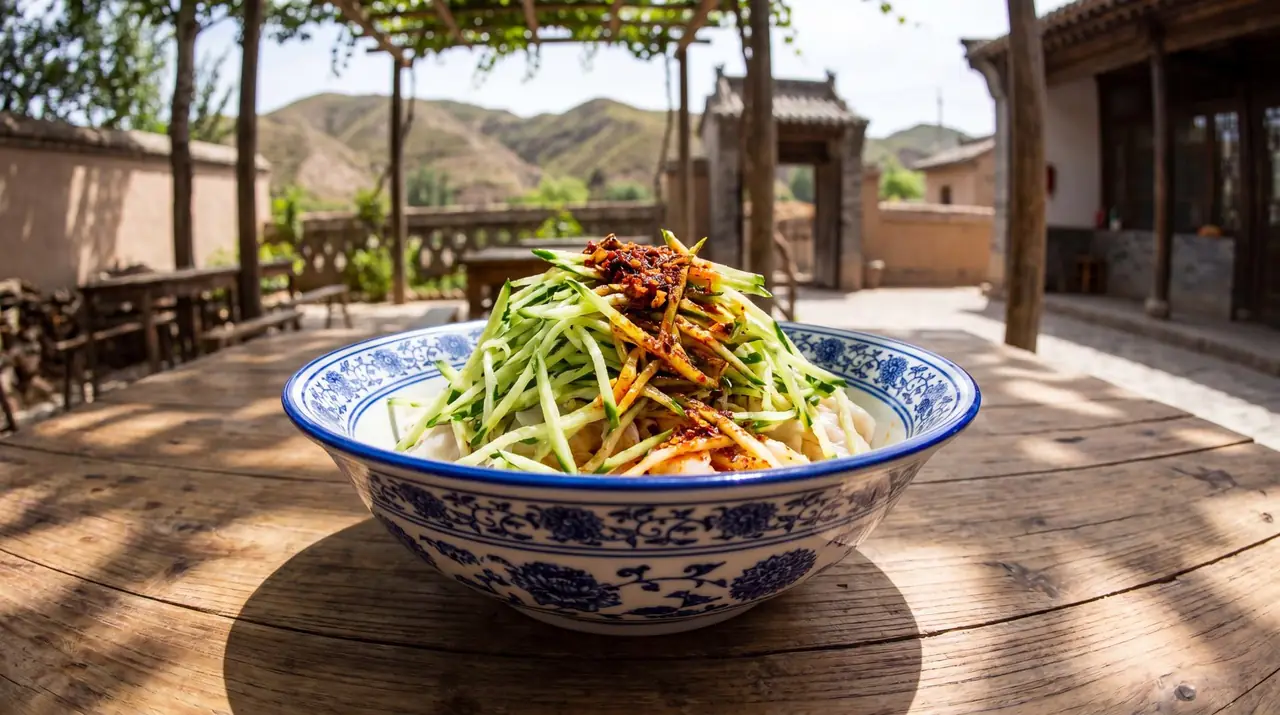
Cold DishesNiangpi is the dish you will crave on a hot Gansu afternoon. It is essentially cold "skin" noodles — chewy, translucent sheets made from wheat or rice flour, dressed with a punchy sauce of vinegar, garlic, chili oil, and sesame paste. It is refreshing, deeply savory, and surprisingly filling. Street vendors sell it from carts all over Lanzhou, and the quality is remarkably consistent. A perfect counterpoint to the heavy noodle soups that dominate local cuisine.
Where to try it
Zhengning Road Night Market — touristy but the niangpi stalls are genuinely good
Dazhong Alley — locals eat here, which is always a good sign
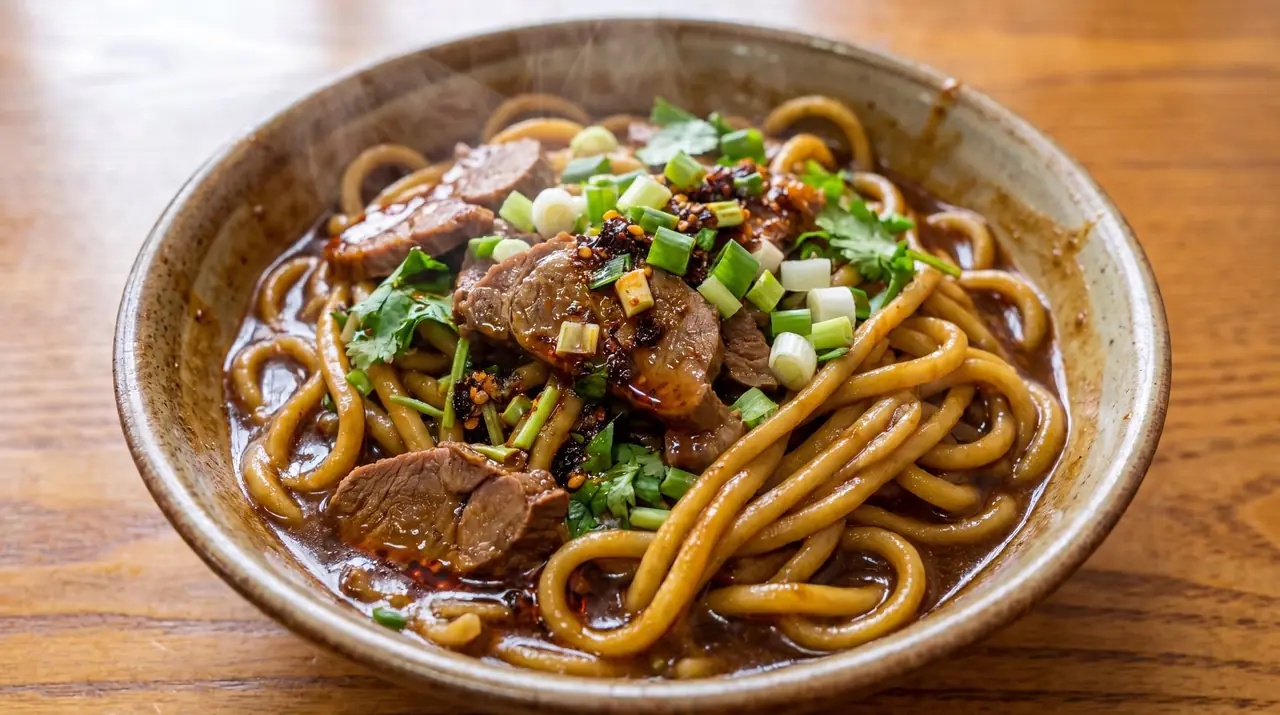
Dunhuang Donkey Meat Noodles
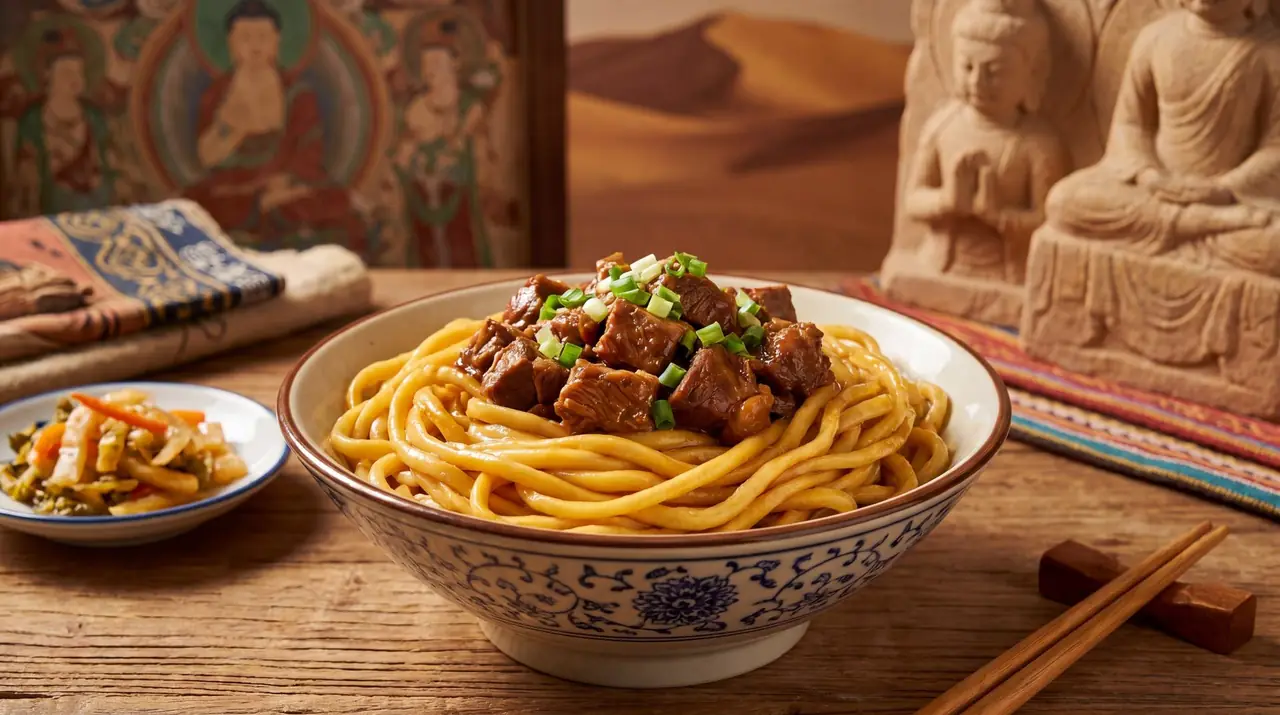
NoodlesThis is one of Dunhuang's more local, less exported comfort foods: springy yellow noodles topped with tender donkey meat, often with a broth or sauce that feels heavier and more road-town practical than Lanzhou's clean beef noodle style. It is the sort of dish that makes more sense after a dusty day between caves, dunes, and long station transfers. You are not eating it for elegance. You are eating it because it is warming, filling, and tied to a specific desert-town appetite.
Where to try it
Older local noodle shops in Dunhuang city rather than polished tourist restaurants
Simple places near the night market with strong local turnover
Mutton Kebabs
BBQGansu mutton is prized across China for good reason — the sheep graze on mountain herbs, and the meat is tender with almost no gamey flavor. The kebabs are simple: chunks of mutton, fat, and maybe a piece of liver, grilled over charcoal and dusted with cumin, chili, and salt. The best vendors grill to order and serve them sizzling. Eat them on the street, preferably with a cold beer (available at Hui-run stalls, despite the halal connection — it is complicated).
Where to try it
Night markets in Lanzhou — the smell of grilling mutton will guide you
Xining Road BBQ Street — dozens of stalls to choose from
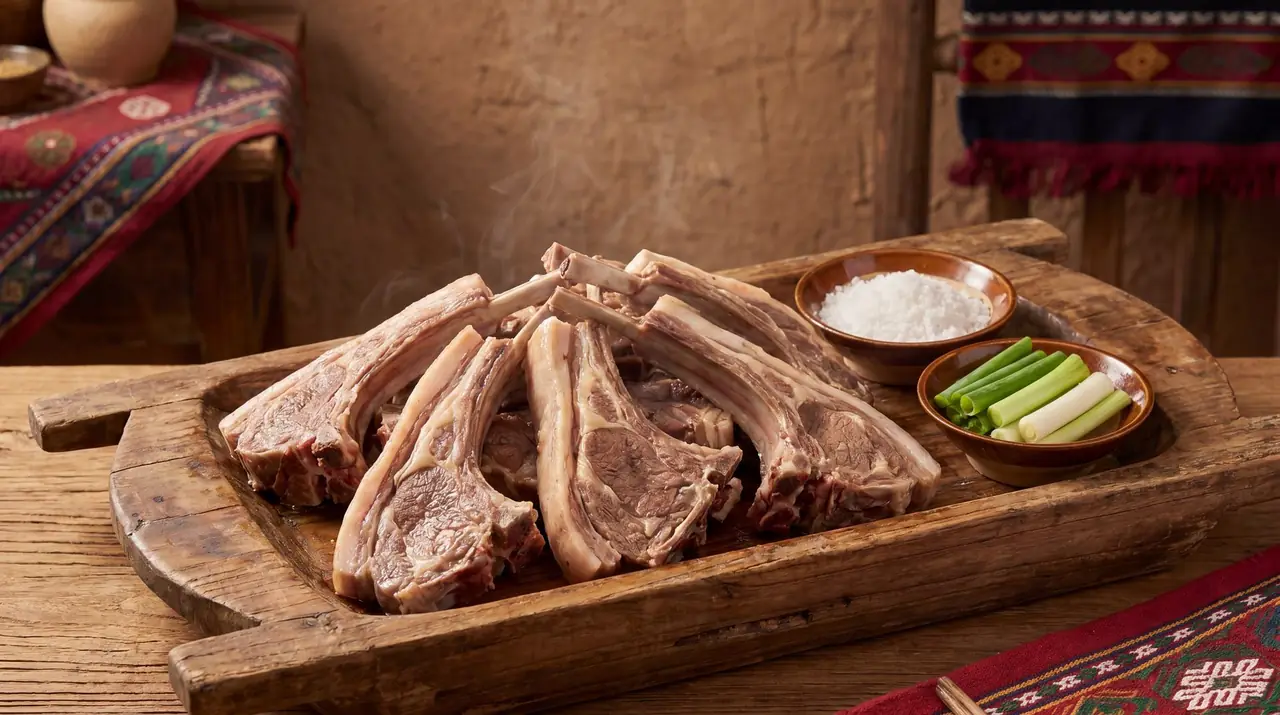
Hand-Grabbed Lamb
Lamb DishesHand-grabbed lamb is one of those dishes that explains northwest China more clearly than any polished tasting menu ever could. The meat is boiled or steamed simply, then served in large pieces to be eaten with the hands, usually with salt, garlic, or a rough dipping mix on the side. In Gansu, it works best when the lamb quality is high and the setting is direct: a Muslim restaurant, a county-town meal stop, or a food-led detour where the dish feels like real appetite instead of performance.
Where to try it
Hui Muslim restaurants in Lanzhou and Linxia with strong lamb turnover
Food-focused stops where whole lamb dishes are part of the core menu
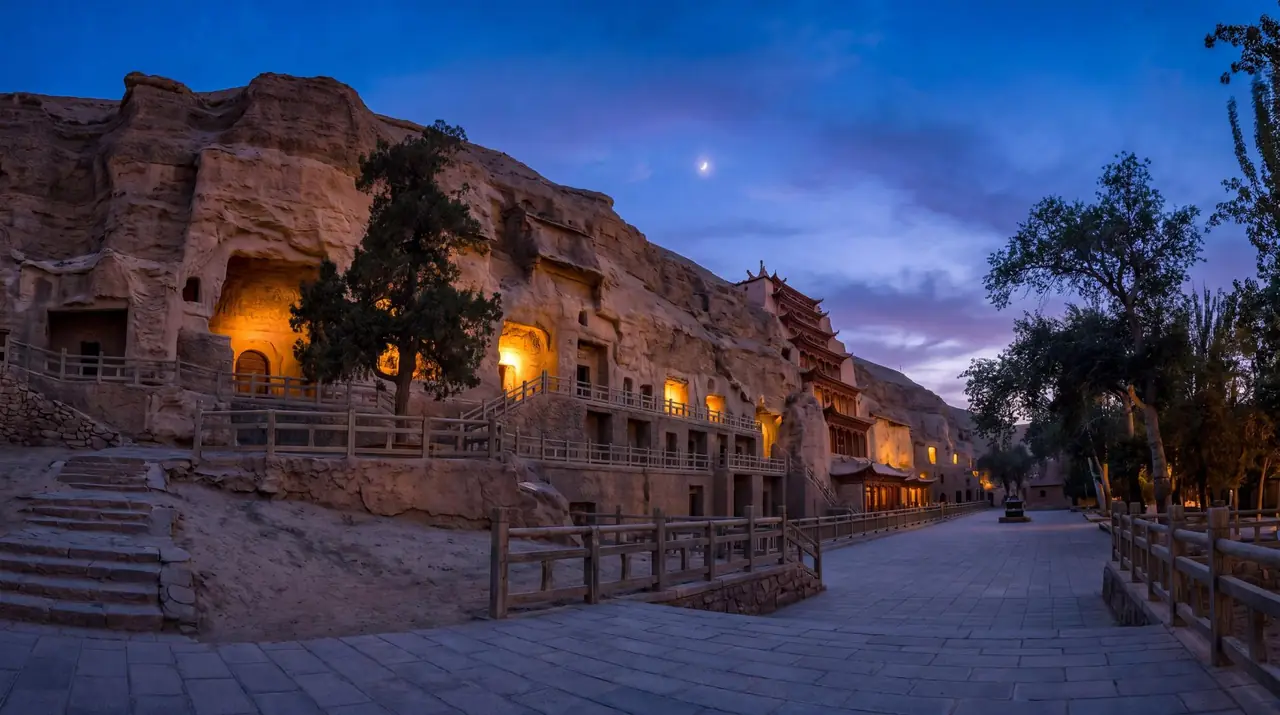
Sanpaotai
BeverageSanpaotai is less a drink and more a social ritual. The Hui people serve it in three rounds, each with a different character: first a light green tea with rock sugar, then a richer brew with walnuts and longan, finally a sweet concoction with honey and raisins. The whole ceremony takes an hour or more, and you are expected to linger and chat. It is tourist-oriented in places like Linxia, but the tradition is real, and the experience is genuinely pleasant — especially after a day of hiking.
Where to try it
Traditional tea houses in Lanzhou — look for the long-spout teapots
Linxia tea houses — more authentic, less polished for tourists
Tibetan Yak Butter Tea
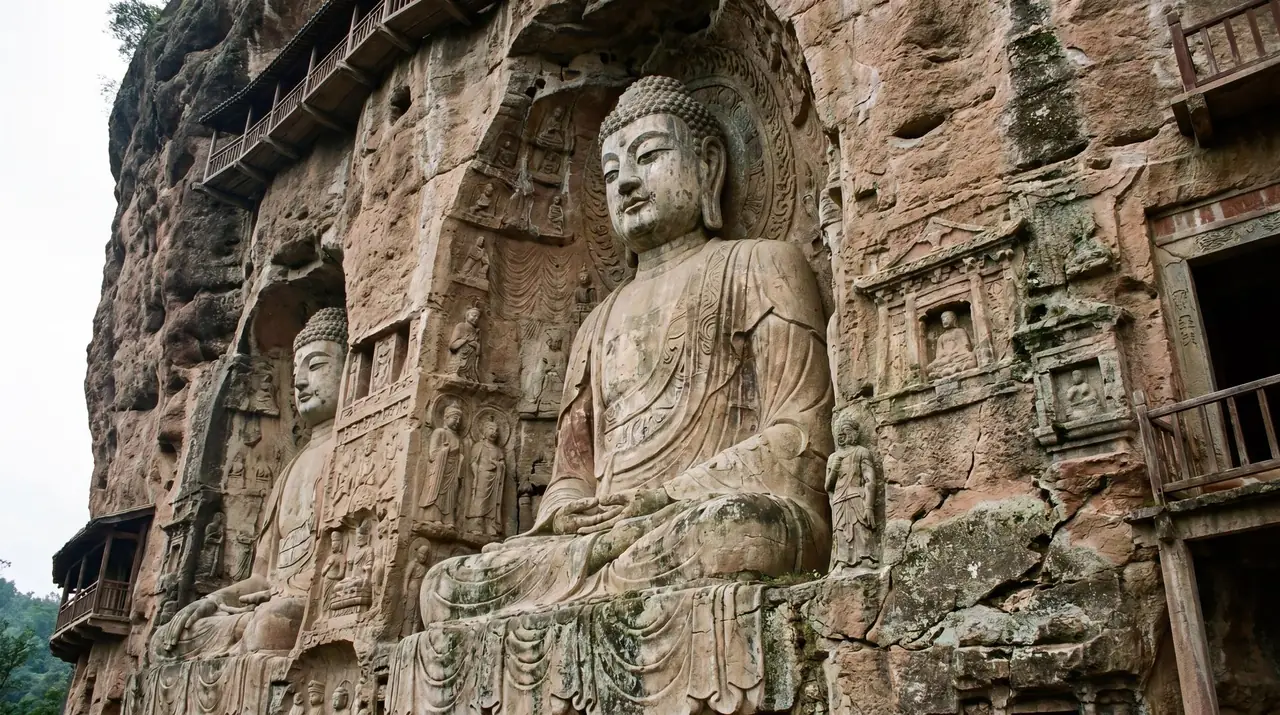
BeverageLet us be honest: yak butter tea is an acquired taste. It is salty, slightly rancid, and has the texture of thin soup. But after a morning at 3,000 meters in the freezing wind, you will understand why Tibetans drink it by the liter. It is essentially liquid calories — butter, tea, and salt blended together — and it works. Try it at least once, ideally in a warm teahouse near Labrang Monastery, where the monks drink it alongside tsampa (roasted barley flour). If you truly cannot stomach it, no one will be offended.
Where to try it
Labrang Monastery area — teahouses filled with monks and pilgrims
Tibetan restaurants in Gannan — usually more palatable for first-timers
Hui Banmian
NoodlesHui Banmian is comfort food at its finest: wide, chewy noodles stir-fried with tomatoes, peppers, onions, and mutton in a savory sauce. It is heartier than beef noodles and more complex in flavor — the Hui Muslim tradition of combining Chinese wheat-based cuisine with Central Asian spicing really shines here. Portions are enormous; one bowl will fuel you for hours. The best versions have a slight smokiness from the wok (wok hei) that only comes from a well-seasoned pan and high heat.
Where to try it
Hui restaurants in Lanzhou — look for Arabic signage and white caps
Linxia Old Town — the Hui culinary heartland of Gansu
Tianshui Malatang
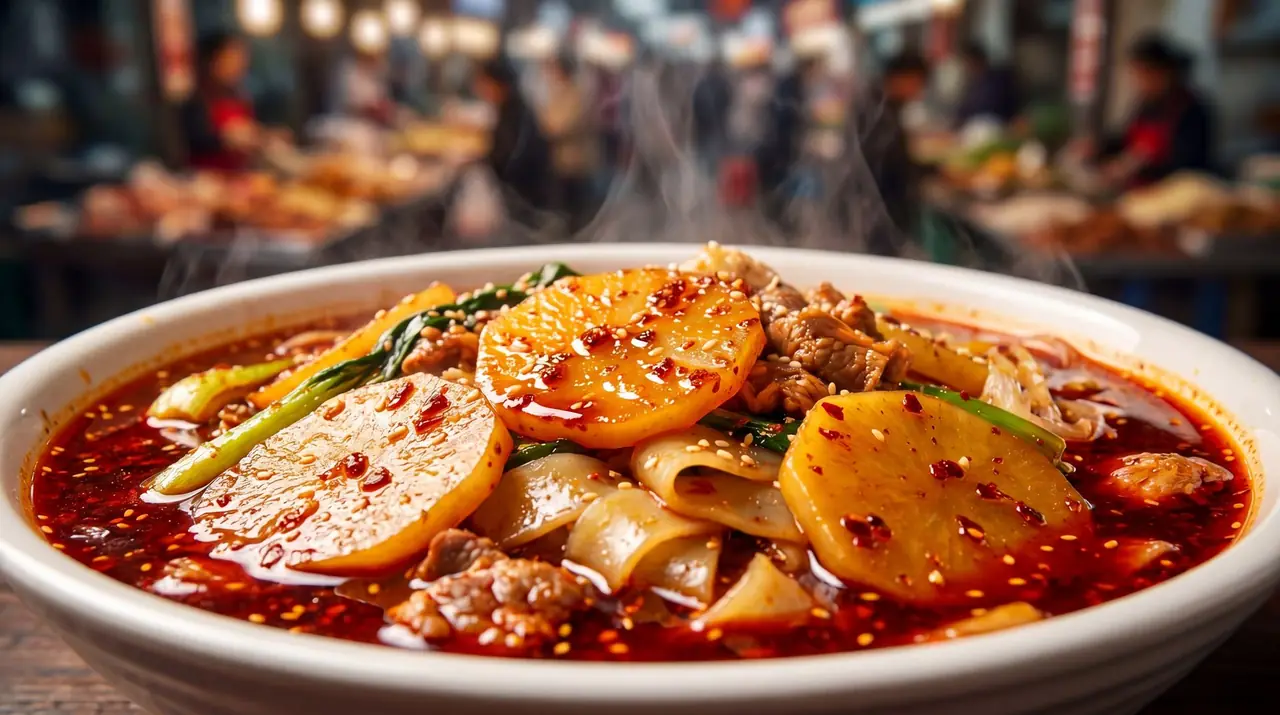
Street FoodTianshui malatang is one of the clearest signs that eastern Gansu has its own food logic rather than simply echoing Lanzhou. Compared with Sichuan-style malatang, the Tianshui version often leans nuttier, richer, and more sesame-heavy, with a deeper red broth or sauce built for serious appetite. It is messy, intense, and not remotely delicate. But that is exactly why it belongs in the city: a strong, highly local dish that can justify a food stop in Tianshui beyond Maijishan alone.
Where to try it
Busy malatang shops in Tianshui city with visible local queues
Casual late-night spots rather than polished chain-style dining rooms
Gansu Bailan Melon
Fruit & DessertIf Gansu had an official summer dessert, Bailan melon would be it. These pale green honeydew melons — grown primarily around Lanzhou and the Hexi Corridor — are famous across China for a reason: the flesh is almost translucent white, with a sweetness that is clean rather than cloying, and a texture that dissolves on the tongue like chilled silk. On a hot July afternoon in Lanzhou, street vendors sell thick wedges for pocket change, and the sight of locals eating melon by the Yellow River with juice running down their chins is one of the most purely Gansu scenes you will witness. The melons peak from July through September. Buy one at a market, ask the vendor to cut it, and eat it within an hour — the cold, crisp sweetness against the dry desert air is one of the simplest pleasures the province offers.
Where to try it
Lanzhou street fruit vendors along the Yellow River promenade — peak season July-September
Local markets in Zhangye and Dunhuang — the Hexi Corridor melons are sometimes even sweeter
Three food lenses that make Gansu easier to read
Thinking in these clusters usually helps more than memorizing dish names.
Hui Muslim everyday food
This is where Lanzhou noodles, banmian, kebabs, breads, and halal dining culture give the province much of its daily flavor.

Tibetan highland comfort
Yak butter tea, yogurt, and heavier food traditions make more sense once you feel the altitude and climate around Xiahe and the south.
Silk Road mixing point
Trade routes shaped spice habits, wheat culture, and the sense that Gansu food belongs to movement as much as geography.
Open these guides when food starts shaping the route
Some trips need more than a generic food page. These guides help when eating culture becomes part of the itinerary logic.
Food City Guide
Linxia Halal Food Guide: One of Gansu's Most Underrated Eating Stops
Linxia is one of the clearest places to understand the Hui Muslim side of Gansu through food, rhythm, and daily urban life.
City Itinerary
Lanzhou Layover Guide: What to Do With One Full Day
Lanzhou is more than a transfer node. One solid day is enough to understand why the city matters to the province.

City Guide
Xiahe Travel Guide: Labrang, Grasslands, and the Right Pace
Xiahe works best when you give it time for monastery rhythm, altitude adjustment, and the quieter parts of town beyond the checklist.
Answer the practical eating questions
Use these pages when diet, restaurant confidence, or city-specific eating makes the difference.
What to eat in Gansu?
Gansu's cuisine reflects its position on the Silk Road, blending Chinese, Hui Muslim, and Tibetan influences into unique and delicious dishes you won't find anywhere else.
Halal restaurants in Gansu?
Halal food in Gansu is not a niche workaround. In many parts of the province it is the mainstream street-level system: noodles, lamb, breads, soups, grills, and tea shaped by Hui Muslim life.
Vegetarian restaurants in Gansu?
Vegetarian travel in Gansu is possible, but you need to be more deliberate than in China's bigger coastal cities. The strongest strategy is not hunting for specialty vegetarian restaurants. It is learning which dishes and city contexts give you the best odds.
Best restaurants in Lanzhou?
Lanzhou is one of the most useful food cities in the province because it lets you understand Gansu through breakfast, noodles, tea, street rhythm, and Muslim food culture instead of one famous dish alone.
Destination pages worth pairing with this section
These stops give the strongest real-world context for the food layer of the trip.
Need the route built around food without losing the bigger trip?
If food matters but you still want the overall route to stay coherent, send us the draft and we can balance eating, transit, and the core sights.
Best fit if you already know your dates, route draft, or must-keep stops.