Great Wall Context

Where Does the Great Wall of China Start and End?

The popular answer is Shanhaiguan in the east and Jiayuguan in the west. The real answer depends on which dynasty's wall you mean โ€” and Gansu is where that distinction becomes something you can actually walk on.

Last verified: November 2026

Why this page exists

This is one of those questions with a clean answer and a complicated one. The clean answer is the one taught in school and repeated in most travel guides: the Ming Great Wall runs from Shanhaiguan on the coast to Jiayuguan in the Gansu desert. The complicated answer is that China's Great Walls were built across many dynasties, on different lines, for different reasons. If you are going to Gansu, the complicated answer is also the more interesting one, because the province holds both the Ming western terminus and the older Han frontier that pushed even farther west.

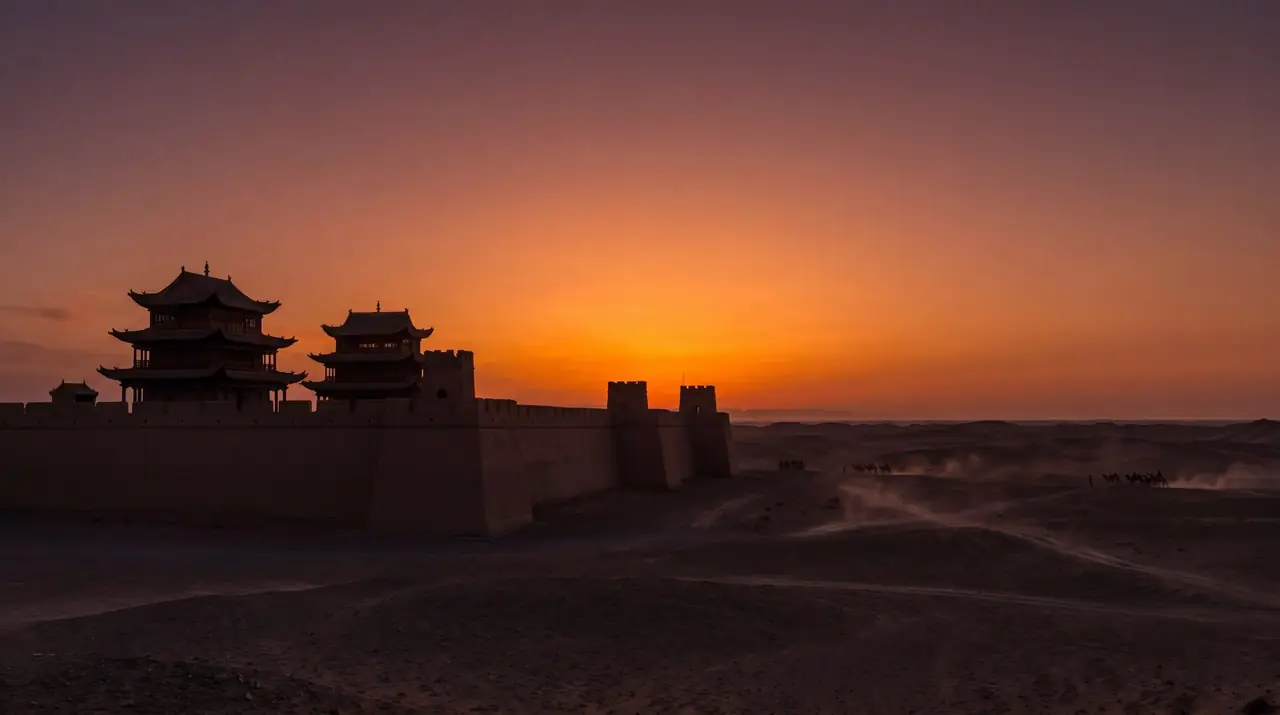
Jiayuguan Pass fortress, the western end of the Ming Great Wall
1

The short answer travelers usually want

The Ming Great Wall โ€” the version most people picture, with brick walls and watchtowers โ€” is usually described as running from Shanhaiguan in Hebei in the east to Jiayuguan in Gansu in the west.

Shanhaiguan is the great eastern pass near the coast, where the wall meets the Bohai Sea at Laolongtou, the 'Old Dragon's Head.' Jiayuguan is the western fortress at the edge of the Hexi Corridor, guarding the road into the desert.

If you are answering a school quiz or planning a trip to Jiayuguan, that is the answer: the western end of the Ming Great Wall is in Gansu.

2

The more accurate answer: it depends on which wall

The Great Wall is not one continuous structure. Different dynasties built different walls, sometimes hundreds of kilometers apart. The Qin, Han, Jin, and Ming walls all followed different lines, and much of what survives today is Ming work with older rammed-earth sections underneath or nearby.

For the Ming line, the popular eastern endpoint is Shanhaiguan, but Ming defenses continued into Liaoning, and the strict easternmost point is often identified as Hushan near Dandong on the Yalu River. Shanhaiguan remains the iconic eastern pass and the one tied to the 'First Pass Under Heaven' name.

In the west, the Han dynasty pushed past Jiayuguan. Han-era walls and outposts ran toward Yumen Pass and Yangguan near Dunhuang, with frontier lines extending farther into what is now Xinjiang. Jiayuguan is therefore the western end of the Ming wall, not the westernmost wall China ever built.

So the honest answer is: Shanhaiguan to Jiayuguan for the Ming Great Wall most visitors mean; a longer, more fragmented story if you count every dynasty. Gansu is where that longer story is easiest to see.

3

Why the Gansu wall looks nothing like the wall near Beijing

If your mental image is Badaling โ€” brick, stone, wide walkways, crowds โ€” Jiayuguan will surprise you. Much of the wall in Gansu is rammed earth and loess, the color of the desert around it, eroded into something closer to a natural ridge than a monument.

That is not a lesser version of the Great Wall. It is a truer version of how most of the wall was actually built in this landscape, where stone and brick were expensive and earth was everywhere. The emptiness is part of the experience.

It also means you should not expect the same facilities, English signage, or easy walking surface as the Beijing sections. The Jiayuguan complex is well organized, but the surrounding wall sections are exposed, windy, and physically rougher.

4

What to see at Jiayuguan, the western end

The main pass is the anchor: a reconstructed fortress complex with a museum, ramparts, and the classic view of desert on one side and the corridor on the other. Start with the museum so the fortress makes sense, then walk the walls.

The Overhanging Great Wall is the section most travelers remember. It climbs a steep ridge north of the pass, and the view from the top explains why this spot was chosen. It is a real climb, not a photogenic detour.

The First Beacon Tower is the westernmost beacon tower of the Ming Great Wall, sitting near the Taolai River gorge south of the city. It is a short stop but an important one if the 'start and end' question is why you came.

The Wei-Jin Tombs, farther east, add a different layer: underground tomb chambers with painted brick murals. They are small, atmospheric, and easy to combine by taxi with the fortress if you have a full day.

5

Where the Han frontier fits: Dunhuang's passes

If you want the older, farther-west story, go to Dunhuang. Yumen Pass and Yangguan are Han-era frontier passes in the desert outside the city, and they feel more like archaeological traces than tourist sites.

Yumen Pass โ€” the Jade Gate โ€” is the one most travelers visit, a lonely earthen gate in open desert. Yangguan is similarly stark. Both require a car or organized tour, and both are best understood before you go rather than after.

These passes are not the Ming Great Wall, and they are not as visually complete as Jiayuguan. What they give you is the sense of how far the frontier actually reached, which is the part the simple Shanhaiguan-to-Jiayuguan answer leaves out.

6

How to fit the Great Wall into a Gansu route

The natural sequence is Lanzhou, Zhangye, Jiayuguan, Dunhuang. Jiayuguan sits between Zhangye and Dunhuang on the high-speed rail line, and one night is enough to see the main pass, the Overhanging Wall, and the beacon tower without rushing.

If the Great Wall is a priority, give Jiayuguan a full day rather than treating it as a station stop. If you also want the Han passes, add a second night in Dunhuang and plan a half-day desert excursion.

The most common mistake is arriving late, seeing the main gate at sunset, and concluding the Great Wall in Gansu is just a reconstructed fort. The Overhanging Wall and the beacon tower are what make the stop feel like a frontier, not a set piece.

Quick answers

Where does the Great Wall of China start and end?

The Ming Great Wall is usually described as running from Shanhaiguan in Hebei in the east to Jiayuguan in Gansu in the west. Jiayuguan is the western terminus of the main Ming line, while Shanhaiguan is the classic eastern pass where the wall meets the sea.

Is Jiayuguan at the start or the end of the Great Wall?

Jiayuguan is the western end of the Ming Great Wall. It is not the westernmost wall China ever built โ€” Han-era walls pushed farther west toward Yumen Pass and into what is now Xinjiang โ€” but it is the end that most travelers mean when they ask the question.

Can you walk on the Great Wall at Jiayuguan?

Yes. The main pass complex has walkable ramparts, and the Overhanging Great Wall section climbs a steep ridge north of the city. Both are reconstructed or restored, not wild wall, but they give a much stronger sense of the frontier than the gate alone.

How do I get to Jiayuguan from Dunhuang or Zhangye?

Jiayuguan sits on the high-speed rail line between them. The train from Zhangye takes roughly 1.5 hours and from Dunhuang roughly 2.5 hours. Jiayuguan South Railway Station is a short taxi ride from the main pass.

Relevant destinations

Related planning answers

More guides in the same planning lane

Aerial view of Crescent Spring and surrounding desert near Dunhuang
Start with a route that makes sense

Need this guide translated into an actual route?

If this page answers the narrow question but the overall itinerary still feels messy, send us the draft and we can help connect the pieces.

Best fit if you already know your dates, route draft, or must-keep stops.

Prefer to write directly? WhatsApp +8618611344921 or muxiaoxin@gmail.com.