Dunhuang Beyond Mogao: Singing Sands, Night Markets, and Evening Dunhuang
Mogao Caves are the anchor, but the rest of Dunhuang — the dunes at sunset, the night market, the quiet old streets — is what gives the city its texture. This guide covers how to structure a fuller Dunhuang stay.
Why this page exists
Most travelers treat Dunhuang as a one-night Mogao stop and move on. That works, but it also misses the best part of the city: the way the light changes over the dunes at dusk, the chaos and warmth of the night market, and the quiet morning streets before the tour buses start. If you have two nights here — or even one well-used full day — this page covers what to do with the hours beyond the caves.

Mingsha Mountain and Crescent Lake: timing is everything
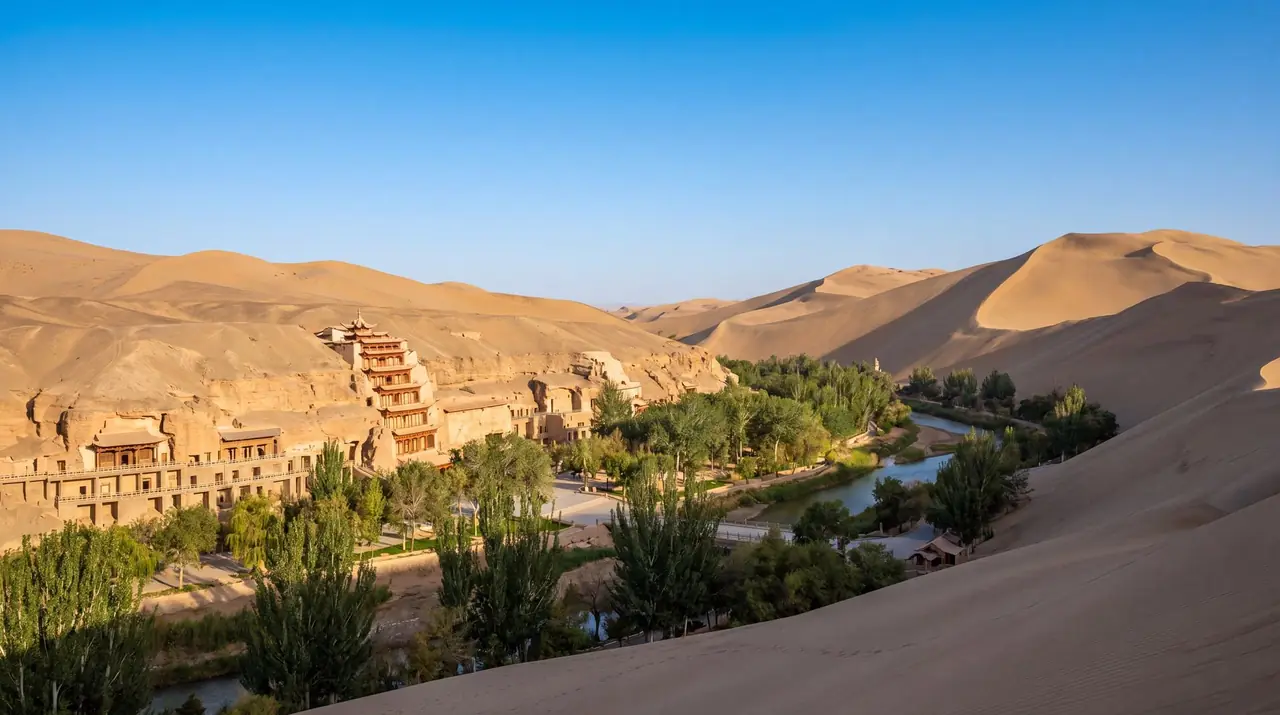
Mingsha Mountain (Singing Sand Dunes) and Crescent Lake are packaged as one scenic area about 5 km south of Dunhuang city. It is touristy, commercialized, and — if you go at the right time — genuinely magical.
The single most important rule: go in the late afternoon, not the morning. Arrive 2-3 hours before sunset. The sand is cooler, the light is better, and the atmosphere shifts from 'theme park' to 'Silk Road dreamscape' as the sun drops.
Climbing the tallest dune is harder than it looks. There are wooden stairs partway up, but the last section is loose sand that slides back with every step. Go slow, take breaks, and accept that you will arrive at the top sweaty and gasping — the view makes it irrelevant.
Camel rides are the classic Dunhuang experience: 40-60 minutes along a circuit at the base of the dunes, led by local handlers. It is touristy and the camels look tired, but riding one at sunset with the dunes stretching away in every direction is hard to beat. Tip your handler ¥10-20 if they take good photos for you.
The Shazhou Night Market: loud, messy, and essential
The Shazhou Night Market (also called Dunhuang Night Market) is not subtle. It is loud, brightly lit, and packed with domestic tourists. But it is also one of the best evening food experiences in Gansu, and skipping it because it is 'touristy' is a mistake.
The market splits into two zones: the covered food court with sit-down stalls serving local dishes, and the open-air street section with souvenirs, dried fruit, and handicrafts. Focus on the food court. Order lamb skewers, naan bread, Dunhuang yellow noodles, and a local beer. The stall owners are competitive — let them call out to you and choose the busiest one.
Go around 8 PM when the market is fully alive. Walk through the souvenir section for atmosphere, but save your money for the food. A good meal here costs ¥50-80 per person and feels like the reward for a day of cave tours and dune climbing.
If the night market is too intense, the streets around it have quieter local restaurants. The area between the market and the city center is walkable and safe after dark.
Dunhuang's quieter side
Between the big attractions, Dunhuang has a slower rhythm worth tapping into. Walk the old city streets near the White Horse Pagoda in the early morning, when the light is soft and the souvenir shops are still shuttered. The Dunhuang Museum (free, well-curated) is worth an hour for the Silk Road context and some excellent Tang dynasty artifacts.
If you have a third day, the Yangguan and Yumen Passes — ancient Silk Road frontier outposts about 90 km from the city — are haunting in their emptiness. There is almost nothing left but crumbling earth walls and desert wind, but the sense of standing at what was once the edge of the known world is powerful. A private car or organized tour is necessary; public transport does not reach these sites.
The Yardang National Geopark (also called the Dunhuang Devil City) is a more ambitious day trip: wind-carved rock formations in strange, dramatic shapes across a vast desert plain. It is 180 km from Dunhuang and requires a full day. Photographers love it at sunset, but the drive back in the dark is long. Only add this if you have a genuine surplus of time.
How to structure a longer Dunhuang stay
Two nights / one full day: Mogao in the morning, afternoon rest, Mingsha dunes from 5 PM to sunset, night market for dinner. This is the tightest version that still feels complete.
Two nights / two full days: Day 1 as above. Day 2 options: Dunhuang Museum in the morning, Yangguan or Yumen Pass as a half-day excursion, or a second sunset at the dunes (the 3-day ticket makes this easy).
Three nights: add the Yardang Geopark as a full-day trip, or drive deeper into the surrounding desert for photography. This is the version where Dunhuang stops being a stop and starts being a destination.
Booking notes: Mogao tickets remain the first priority. Mingsha tickets can be bought on arrival. The night market needs no planning other than arriving hungry.
Relevant destinations

Related planning answers

FAQ
How to visit Gansu?
Visiting Gansu requires some planning, but the rewards are immense. This guide covers everything from getting there to creating the perfect itinerary.
Read answer
FAQ
5-day Gansu itinerary?
This 5-day itinerary covers the essential highlights of Gansu's Hexi Corridor, from Lanzhou's noodles to Dunhuang's ancient caves.
Read answer

FAQ
What to eat in Gansu?
Gansu's cuisine reflects its position on the Silk Road, blending Chinese, Hui Muslim, and Tibetan influences into unique and delicious dishes you won't find anywhere else.
Read answer
More guides in the same planning lane
Need this guide translated into an actual route?
If this page answers the narrow question but the overall itinerary still feels messy, send us the draft and we can help connect the pieces.
Best fit if you already know your dates, route draft, or must-keep stops.