Gansu for Older Travelers: Comfort, Pace, and Route Design That Respects Energy
Gansu can be an excellent destination for older travelers — the sites are spectacular, the trains are comfortable, and the pace can be adjusted to any energy level. The key principles: fewer stops, better hotels, more recovery time, and zero guilt about skipping the strenuous bits.
Who this page is for
Gansu for Older Travelers: Comfort, Pace, and Route Design That Respects Energy
I have planned Gansu routes for travelers in their 60s and 70s, and the trips that work best share a common philosophy: comfort is not a compromise, it is the foundation. When you are not fighting fatigue, cold, or a rushed schedule, the province opens up in a way that a frantic itinerary cannot match. This page is about designing a Gansu trip that is rich, dignified, and genuinely enjoyable — without anyone needing a vacation from the vacation.
The comfort-first route: 8 days
Day 1: Arrive Lanzhou. No activities planned — just a good meal and settling in. Stay at a river-view hotel with reliable heating/cooling.
Day 2: Lanzhou. Late morning start. Gansu Provincial Museum (accessible, well-organized, excellent Silk Road exhibits). Afternoon: Yellow River promenade walk or rest. Evening: good restaurant, early night.
Day 3: Lanzhou → Zhangye. Late morning train (high-speed, comfortable seats, clean). Arrive, check into hotel, rest. Light afternoon: Giant Buddha Temple (flat, accessible, impressive).
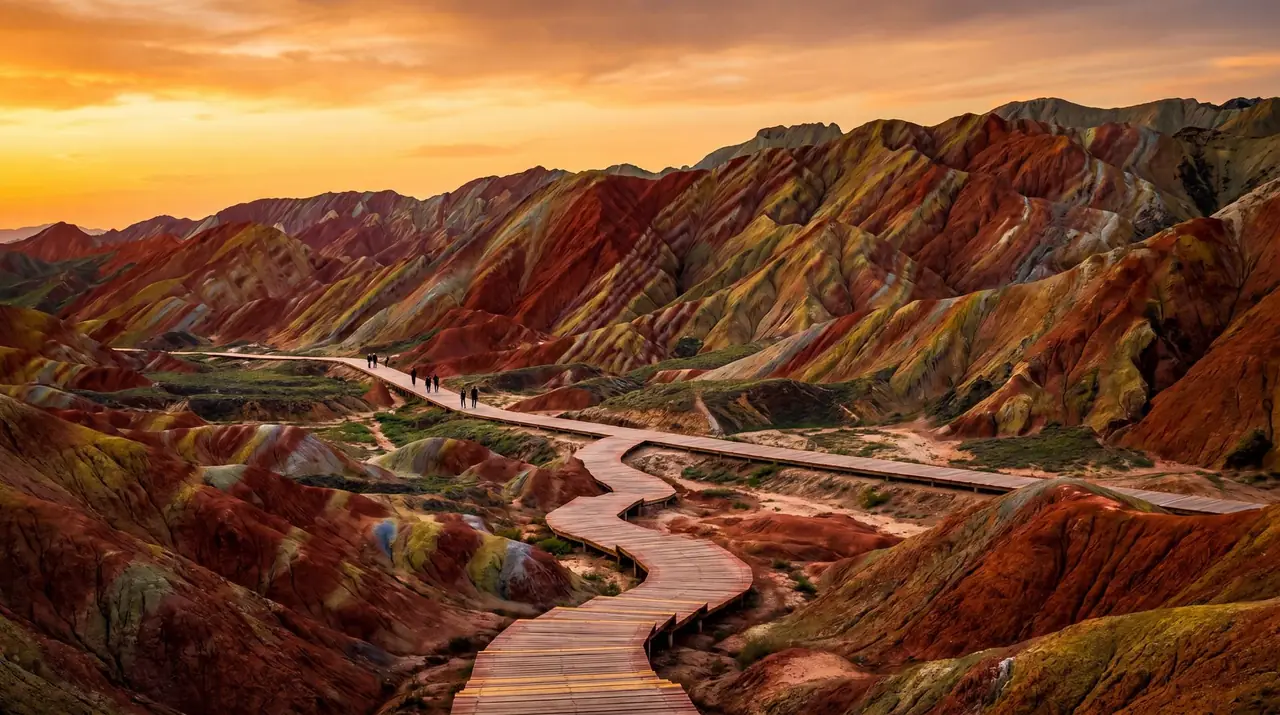
Day 4: Zhangye Danxia. Go at a comfortable morning hour — sunrise is not necessary. The park has shuttle buses between viewpoints. The boardwalks have stairs but are manageable at a slow pace. Skip Binggou Danxia (more hiking, rougher terrain).
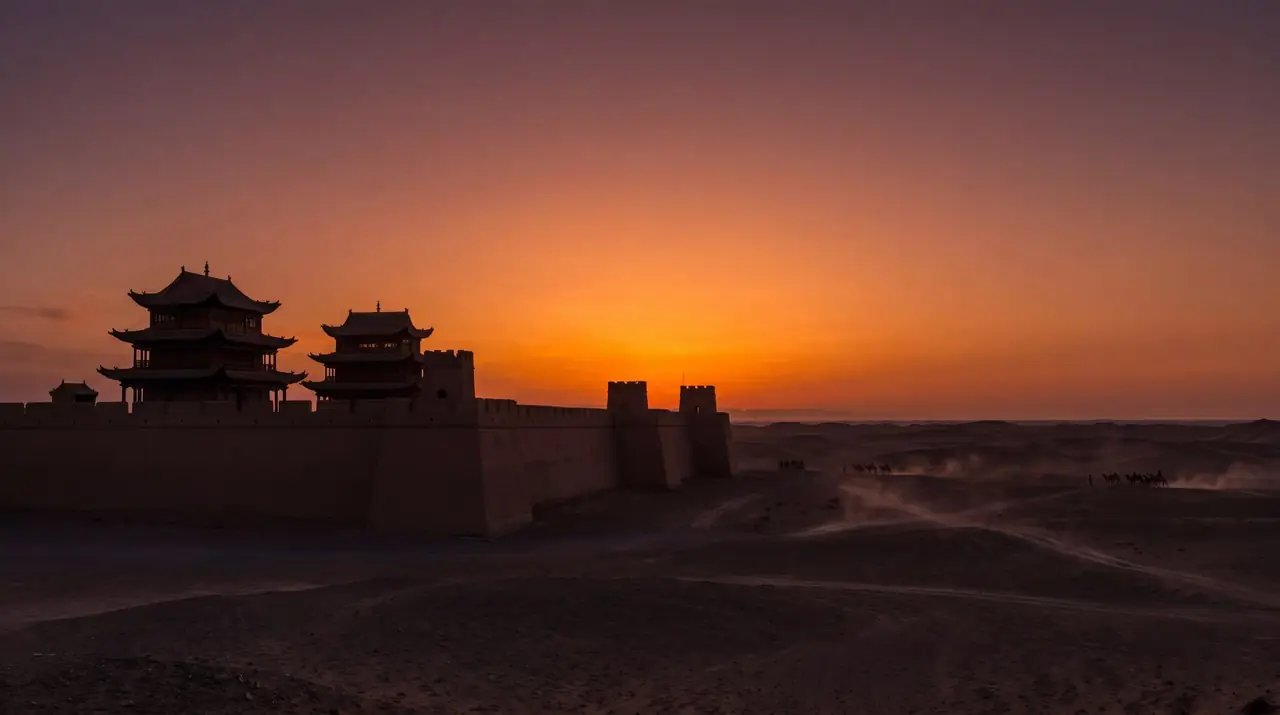
Day 5: Zhangye → Jiayuguan. Short train (1.5 hours). Visit the fortress at a gentle pace — the main complex is flat and walkable. Skip the Overhanging Wall (very steep). The museum is excellent and accessible.
Day 6: Jiayuguan → Dunhuang. Train to Dunhuang (2.5 hours). Afternoon rest. Evening: night market stroll — flat, interesting, sensory.
Day 7: Dunhuang. Morning: Mogao Caves (book the earliest slot, less crowded). The tour involves standing and walking on uneven ground but is done at a moderate pace. Afternoon: rest at hotel. Late afternoon: Singing Sand Mountain — skip the dune climb, but the camel ride (if mobility allows) and the views from the base are worthwhile.
Day 8: Dunhuang. Flexible morning. Departure.
Site-specific accessibility notes
Mogao Caves: involves walking between cave clusters, standing during guide explanations, and navigating wooden boardwalks. Manageable at a slow pace. No seating inside caves. About 2-3 hours total on your feet. Not wheelchair accessible.
Zhangye Danxia: shuttle buses between viewpoints. Boardwalks have stairs. Not all viewpoints require climbing — the first two are the most accessible. Skip viewpoints 3 and 4 if stairs are a concern.
Jiayuguan Fortress: largely flat, good paths. The museum is modern and accessible. Skip the Overhanging Wall (steep, uneven, no facilities).
Lanzhou Museum: fully accessible, elevators, seating areas, clean restrooms. The best museum experience in the province for comfort.
Maijishan Grottoes: not recommended. The cliff walkways are steep, exposed, and genuinely challenging. Skip this stop entirely for older travelers.
Accommodation principles
Spend on hotels. International chains where available (Lanzhou has several). In smaller cities, pick the best-rated local option with elevator, heating/cooling, and 24-hour hot water. The price difference between adequate and comfortable is often only 200-300 yuan per night.
Ground-floor or elevator-access rooms. Not all smaller hotels have elevators. Confirm when booking.
Two-night minimum in each stop. Packing and unpacking every day is exhausting at any age. With two nights per stop, the trip has a rhythm of arrival days and exploration days.
Health and comfort notes
Altitude: the Hexi Corridor is all below 1,600m, which is safe for almost everyone. Skip Xiahe (2,900m) and Gannan unless altitude tolerance is confirmed.
Climate: the dry air is hard on skin and respiratory systems. Bring moisturizer, lip balm, and saline nasal spray. Stay hydrated. The desert sun is strong — hats and sunscreen are essential.
Medical: carry a basic medical kit including any prescription medications (with copies of prescriptions). Pharmacies in Lanzhou are well-stocked; in smaller cities, selection is limited. Travel insurance with medical evacuation coverage is strongly recommended.
Rest days are not wasted days. A morning at a café, an afternoon in a hotel courtyard, an evening stroll — these are the moments that make the trip sustainable.
Related questions

FAQ
Best time to visit Gansu?
Gansu's continental climate means dramatic seasonal variations. Understanding the weather patterns will help you choose the perfect time for your visit.
Read answer
FAQ
How to get around Gansu?
Gansu's transportation network has improved dramatically with high-speed rail connecting major destinations. Here's how to navigate the province.
Read answer
FAQ
What to pack for Gansu?
Packing for Gansu requires preparation for varying altitudes, temperatures, and outdoor activities. Here's your complete packing guide.
Read answer
Go deeper with guides

City Guide
Xiahe Travel Guide: Labrang, Grasslands, and the Right Pace
Xiahe works best when you give it time for monastery rhythm, altitude adjustment, and the quieter parts of town beyond the checklist.
Open guide

Destination Strategy
Tianshui and Maijishan: A Strong East Gansu Detour
Tianshui is not the province's headline city, but Maijishan makes it one of the smartest detours for travelers who care about cave art and quieter historical sites.
Open guide

Booking Guide
How to Book Mogao Caves Tickets Without Wasting the Trip
Mogao is one of the few places in Gansu where poor booking timing can genuinely weaken the trip, so it is worth planning this stop properly.
Open guide
Relevant destinations
Destination
Dunhuang Mogao Caves
Ancient Buddhist cave temples with exquisite murals and sculptures along the Silk Road.
Open destination
Destination
Zhangye Rainbow Mountains
Breathtaking colorful mountain formations known as Rainbow Mountains.
Open destination

Destination
Jiayuguan Pass
The westernmost end of the Great Wall, known as the Greatest Pass Under Heaven.
Open destination

Destination
Lanzhou
Capital city of Gansu, gateway to the Silk Road on the Yellow River.
Open destination
Need help adapting the route to your group?
If your traveler type adds constraints that the standard plans do not cover, send us your situation and we can help shape a route that fits.
Best fit if you already know your dates, route draft, or must-keep stops.