Gansu for Photographers: Light, Timing, and the Shots Worth Planning Around
Gansu is a serious photography destination. The light is extraordinary — dry air, high altitude, and low humidity create clarity and color saturation that coastal and tropical destinations cannot match. The challenge is timing: the best light at each site hits at different hours, and a photographer's schedule looks nothing like a standard tourist itinerary.
Who this page is for
Gansu for Photographers: Light, Timing, and the Shots Worth Planning Around
If you are carrying more than a phone camera, Gansu will reward you. The province has genuine photographic range: desert abstraction, rainbow geology, Buddhist mural art, monastery ritual life, night-market chaos, and the kind of golden-hour light that makes every landscape look intentional. But the photography window at each site is narrow. This page is about building a route around the light, not around breakfast buffets.
The best photo locations by time of day
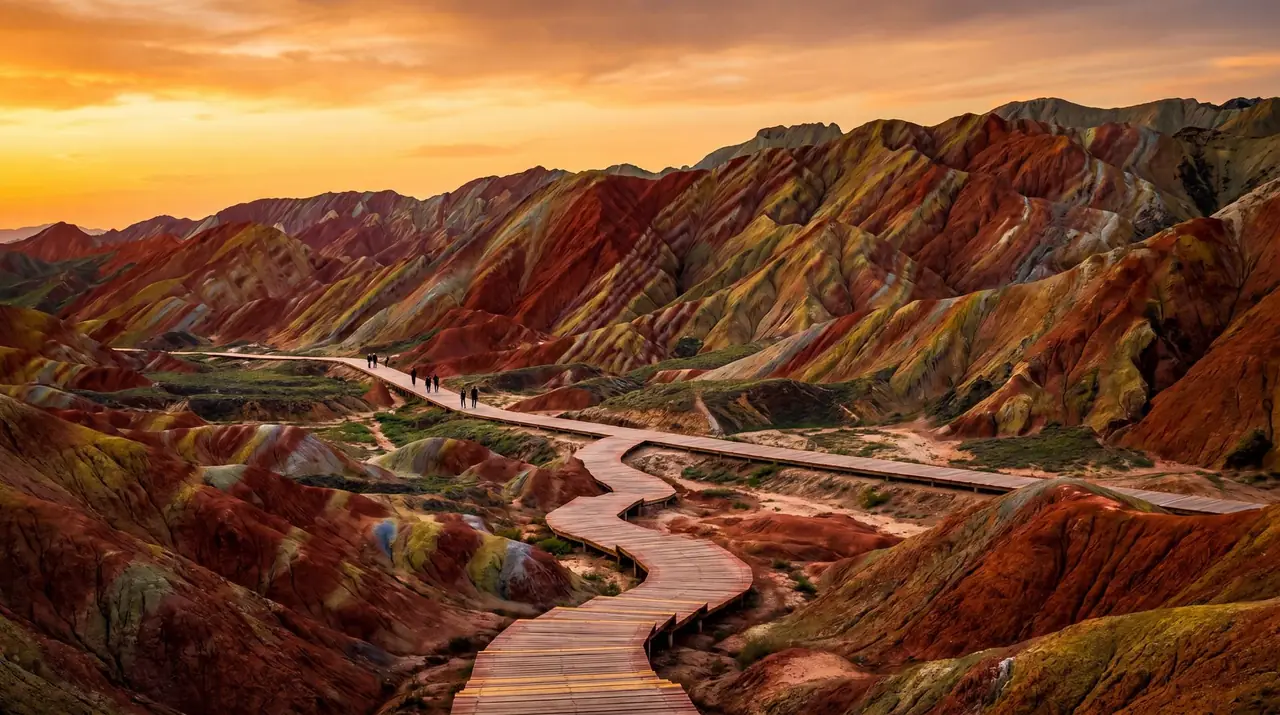
Sunrise: Zhangye Danxia. The first light hitting the rainbow ridges is the single best photo moment in the province. Arrive 30 minutes before sunrise. Viewing platform 1 and 4 have the strongest compositions. Bring a wide-angle and a telephoto — the compression shots of layered ridges are where the magic lives.
Early morning: Mogao Caves exterior and the surrounding desert. The cave interiors do not allow photography, but the cliff face in morning light, the poplar groves, and the desert approach road are all strong. Morning also means fewer tourists in your frame.
Late afternoon / golden hour: Jiayuguan Fortress. The western light hits the ramparts and the desert beyond. The fortress walls glow. A telephoto shot down the length of the wall toward the snowy Qilian Mountains in the distance is the definitive Jiayuguan image.
Sunset: Singing Sand Mountain and Crescent Spring. The dunes at sunset are pure photography. The sand turns gold, the shadows deepen, the crescent lake reflects the last light. Climb to a mid-dune position rather than the top — the compositions are stronger with layered sand patterns.
Blue hour: Lanzhou riverfront. The iron bridge lit up, the city lights reflected in the Yellow River, the mountains in the background fading to silhouette. A tripod is essential.
Seasonal photography notes
April-May: clear air, low humidity, sharp light. The best months for landscape clarity. Sandstorms are a risk in April but produce dramatic skies when they clear.
June-August: hazy but the grasslands are green. Southern Gansu is lush and photogenic. The corridor can look flat in midday but sunrise and sunset are still strong.
September-October: the best light of the year. Golden hour lasts longer, the air is crisp, autumn color peaks in mid-to-late October along the corridor. This is when serious photographers are here.
November-March: stark, bare, dramatic. The winter light is harsh but creates strong contrast. Snow on the Qilian Mountains adds scale. Fewer tourists in your frame. The cold is real.
Gear recommendations
Wide-angle zoom (16-35mm): essential for Danxia, fortress interiors, monastery courtyards, and night markets.
Telephoto zoom (70-200mm or longer): for landscape compression at Danxia, distant monastery details, and candid street photography without intrusion.
Tripod: essential for blue hour, sunrise, and any interior monastery shots. Lightweight carbon fiber is worth the weight penalty for travel.
Dust protection: the Hexi Corridor is dusty. Bring a rocket blower, sensor cleaning supplies, and a weather-sealed camera if possible. Change lenses indoors or in a bag. A UV filter on every lens is cheaper to replace than a scratched front element.
Extra batteries: cold weather in spring and autumn drains batteries faster than expected. Power outlets on trains are available but not always convenient.
Photography etiquette and restrictions
No photography inside Mogao Caves. Period. The rule is absolute and enforced. The exterior, the museum, and the surrounding desert are all fair game and excellent.
Monastery interiors: no photography during prayer. Some monasteries allow photography of architecture and art outside prayer times. Ask with a gesture. If unsure, assume no.
People photography: most Gansu locals are tolerant of being photographed, especially in public markets and street scenes. But a smile and a gesture asking permission goes a long way. Tibetan pilgrims and monks may decline — respect this immediately.
Drone use: drones are restricted near military installations, airports, and some tourist sites. Gansu has significant military presence in parts of the corridor. Check local regulations. When in doubt, leave the drone in the bag.
Related questions

FAQ
Best time to visit Gansu?
Gansu's continental climate means dramatic seasonal variations. Understanding the weather patterns will help you choose the perfect time for your visit.
Read answer
FAQ
What to pack for Gansu?
Packing for Gansu requires preparation for varying altitudes, temperatures, and outdoor activities. Here's your complete packing guide.
Read answer

FAQ
7-day Gansu itinerary?
This comprehensive 7-day itinerary adds Tibetan culture at Labrang Monastery and the Maijishan Grottoes to the classic Hexi Corridor route.
Read answer
Go deeper with guides

City Guide
Xiahe Travel Guide: Labrang, Grasslands, and the Right Pace
Xiahe works best when you give it time for monastery rhythm, altitude adjustment, and the quieter parts of town beyond the checklist.
Open guide

Booking Guide
How to Book Mogao Caves Tickets Without Wasting the Trip
Mogao is one of the few places in Gansu where poor booking timing can genuinely weaken the trip, so it is worth planning this stop properly.
Open guide
Photography Timing
Zhangye Danxia Sunrise Guide: Timing, Light, and What Matters
The Rainbow Mountains are strongest when the light is right. Sunrise is not mandatory for everyone, but it changes the experience dramatically.
Open guide
Relevant destinations
Destination
Dunhuang Mogao Caves
Ancient Buddhist cave temples with exquisite murals and sculptures along the Silk Road.
Open destination
Destination
Zhangye Rainbow Mountains
Breathtaking colorful mountain formations known as Rainbow Mountains.
Open destination

Destination
Jiayuguan Pass
The westernmost end of the Great Wall, known as the Greatest Pass Under Heaven.
Open destination

Destination
Labrang Monastery
One of the most important Tibetan Buddhist monasteries outside Tibet.
Open destination
Need help adapting the route to your group?
If your traveler type adds constraints that the standard plans do not cover, send us your situation and we can help shape a route that fits.
Best fit if you already know your dates, route draft, or must-keep stops.