Gansu in Autumn: September to November — The Season That Makes Photographers Stay Longer
Autumn is the season that serious repeat visitors keep to themselves. September has the best light of the year. October is cool, clear, and alive with harvest markets. November is the last call before winter closes the high passes. If you can only pick one season, this is probably it.
The honest picture
Gansu in Autumn: September to November — The Season That Makes Photographers Stay Longer
If spring is uncertain and summer is crowded, autumn is the season Gansu was built for. The light turns golden and stays that way for hours. The heat breaks. The sky is impossibly clear. The tourist numbers start dropping in late September, and by mid-October you can have stretches of the Hexi Corridor that feel almost private. There is a reason photographers hoard their autumn Gansu shots.
What makes autumn different
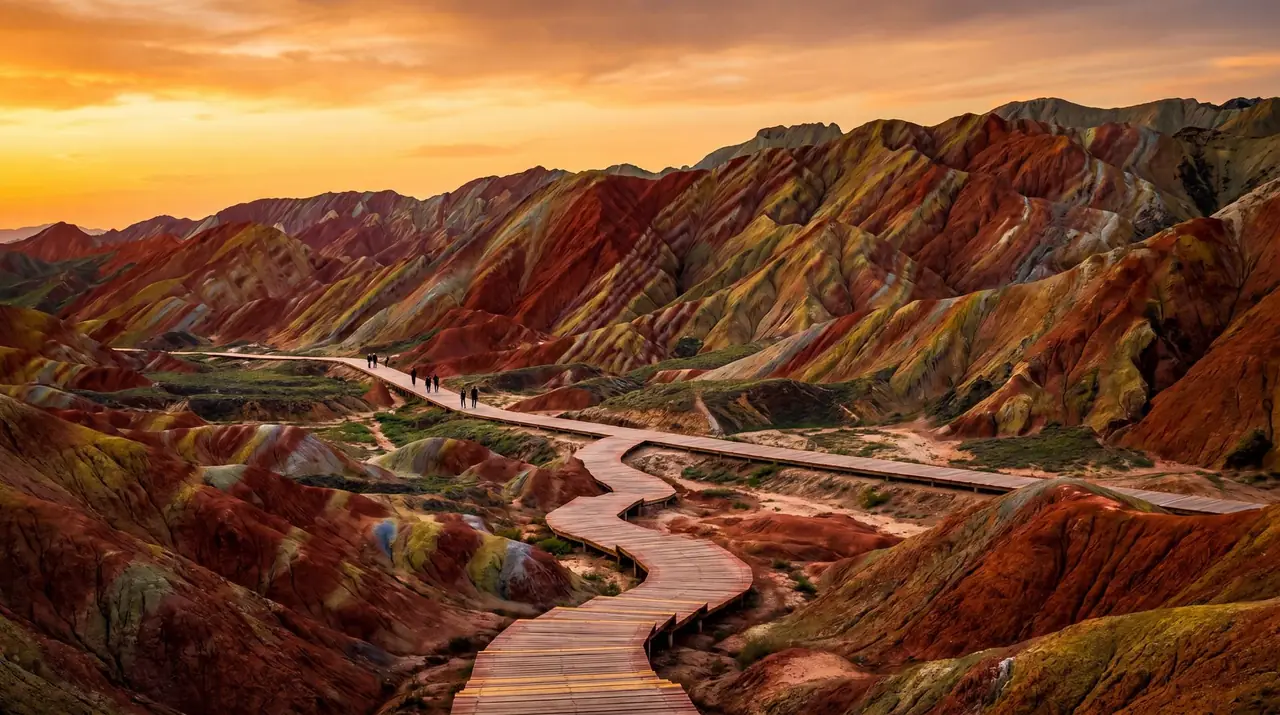
The defining feature of Gansu autumn is the light. Lower humidity, cleaner air, and a lower sun angle combine to produce the kind of golden-hour light that lasts half the afternoon. The Danxia colors look richer. The desert shadows are deeper. Even Lanzhou's industrial skyline looks good in October light.
Temperatures are ideal for active travel. September days hover around 22-28°C in the Hexi Corridor. October is cooler but still comfortable with a light jacket. November gets cold, especially at night, but the days are often still clear and bright.
Crowds thin dramatically after the first week of October. The National Day holiday (October 1-7) is the busiest week of the year in China, and Gansu is no exception. Avoid that week at all costs. But from October 8 onward, the province empties out and you get the best combination of good weather and low visitor numbers of the entire year.
September: the photographer's month
September might be the single best month to visit Gansu. The summer heat has broken. The sky is postcard-blue most days. Kids are back in school, so domestic family travel drops off. And the light — I keep coming back to the light, but it genuinely transforms how the landscapes look.
The grasslands in Gannan start turning gold in mid-September, which is a different kind of beauty from the summer green. The poplar and willow trees around Dunhuang and Lanzhou begin to change color late in the month.
September is also harvest season. Markets in Lanzhou and county towns are full of melons, grapes, dates, and walnuts. The food scene feels more abundant and more connected to the land than at any other time of year.
October: clear, cool, and post-holiday quiet
October is the month I recommend most often. The first week is a write-off — National Day means crowds, high prices, and booked-out trains. But from October 8 through the end of the month, the conditions are close to perfect.
Daytime temperatures in the Hexi Corridor run 15-22°C. Nights drop to 5-10°C. You need layers, but you are not fighting extreme heat or cold. The poplar forests around Dunhuang and Jinta (a lesser-known spot about an hour from Jiayuguan) turn brilliant gold in mid-to-late October, and the autumn color photography is genuinely world-class.
This is also the best month for long-distance hiking and outdoor exploration. The mild temperatures mean you can spend full days outside without the summer heat dictating your schedule.
November: the last good month
November is the transition. The first half can still be beautiful — cold mornings, clear days, almost no other tourists. The second half is when winter starts to close in. Northern Gansu gets cold. Some smaller hotels in Dunhuang start closing for the season.
The advantages: rock-bottom prices, empty sites, and a stark, wintry beauty that most visitors never see. The Mogao Caves in November are as quiet as they ever get. The Jiayuguan fortress against a gray November sky has a melancholic grandeur that suits its history.
The disadvantages: it is cold, especially at night and at altitude. Southern Gansu above 3,000m can see snow by mid-November. Grassland roads may close. Some guesthouses shut down. This is only recommended if you are comfortable with winter-adjacent travel.
If you do go in November, focus on the Hexi Corridor cities — Lanzhou, Zhangye, Jiayuguan, Dunhuang — and skip the high-altitude southern detours.
Autumn planning notes
Avoid October 1-7. Book nothing during National Day unless you have no choice, and if you must, book everything months ahead.
Pack for temperature swings. A September day can be 25°C at noon and 8°C at night. By November, that range shifts to 12°C and -2°C. Layers, a warm jacket, and a windproof outer shell cover most situations.
Autumn is dry. The humidity drops even further from the already-low baseline. Lip balm, hand cream, and extra water are practical essentials, not luxuries.
The poplar forests at Jinta (near Jiayuguan) peak around October 15-25. It has become a popular photography destination for Chinese tourists, but it is still manageable if you go on a weekday.
Related questions

FAQ
Best time to visit Gansu?
Gansu's continental climate means dramatic seasonal variations. Understanding the weather patterns will help you choose the perfect time for your visit.
Read answer

FAQ
5-day Gansu itinerary?
This 5-day itinerary covers the essential highlights of Gansu's Hexi Corridor, from Lanzhou's noodles to Dunhuang's ancient caves.
Read answer
FAQ
What to pack for Gansu?
Packing for Gansu requires preparation for varying altitudes, temperatures, and outdoor activities. Here's your complete packing guide.
Read answer
Go deeper with guides

Booking Guide
How to Book Mogao Caves Tickets Without Wasting the Trip
Mogao is one of the few places in Gansu where poor booking timing can genuinely weaken the trip, so it is worth planning this stop properly.
Open guide
Photography Timing
Zhangye Danxia Sunrise Guide: Timing, Light, and What Matters
The Rainbow Mountains are strongest when the light is right. Sunrise is not mandatory for everyone, but it changes the experience dramatically.
Open guide
City Extension
Dunhuang Beyond Mogao: Singing Sands, Night Markets, and Evening Dunhuang
Mogao Caves are the anchor, but the rest of Dunhuang — the dunes at sunset, the night market, the quiet old streets — is what gives the city its texture. This guide covers how to structure a fuller Dunhuang stay.
Open guide
Relevant destinations
Destination
Dunhuang Mogao Caves
Ancient Buddhist cave temples with exquisite murals and sculptures along the Silk Road.
Open destination
Destination
Zhangye Rainbow Mountains
Breathtaking colorful mountain formations known as Rainbow Mountains.
Open destination

Destination
Jiayuguan Pass
The westernmost end of the Great Wall, known as the Greatest Pass Under Heaven.
Open destination
Still deciding which season works for your trip?
If you have a rough date window but want help thinking through the seasonal trade-offs, send us your draft plan.
Best fit if you already know your dates, route draft, or must-keep stops.