Where is Anning District in Lanzhou?
Anning District is on the west bank of the Yellow River, across from central Lanzhou. It is usually a 20–30 minute taxi or bus ride from Chengguan, depending on traffic.
Anning is where Lanzhou students eat: cheaper, faster, less polished, and more useful than the tourist strips downtown. This is a practical guide to the area rather than a list of famous restaurants that may not exist by the time you arrive.
Why this page exists
Most visitors never cross the Yellow River to Anning. That is understandable — the main sights are all in Chengguan, and the guidebooks stop at Jingning Road. But Anning is the university district, and in Chinese cities the university district is usually where the food is honest. It is not a scenic neighborhood. It is where you go when you want a proper meal at a local price and do not need English on the menu.
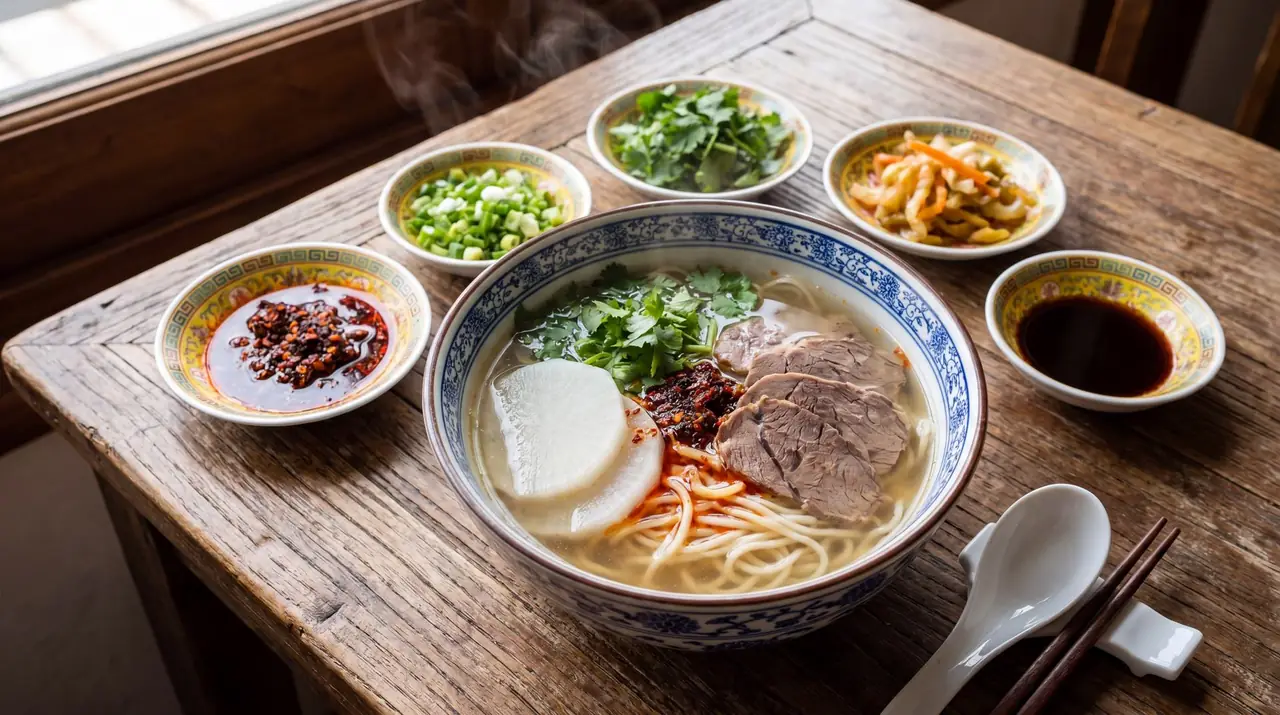
Anning District sits on the west bank of the Yellow River and is built around several large universities. That means a permanent population of students who eat out constantly, which keeps prices down and turnover high.
The food is not fancy. It is the everyday Lanzhou repertoire — noodles, barbecue, hotpot, dumplings, snacks — but with fewer tourists and lower prices than the central areas around Zhengning Road.
The trade-off is convenience and language. You will need a taxi or bus, most menus are Chinese-only, and the area is not designed around visitors. If you are comfortable with that, it is one of the better food evenings in the city.
Jinniu Street is the best-known food strip in Anning, a student-oriented street of barbecue, noodle shops, snack stalls, and small restaurants. It is busiest in the evening, and the quality is generally tied to how busy each stall is.
Peili Square is the other useful anchor, with a cluster of restaurants and street food around the university area. It is less of a single strip and more of a neighborhood to wander, but it works well for an evening of grazing.
The exact tenant mix changes constantly. Do not build the trip around one specific shop from an old blog post. Use these areas as starting points, then follow the students and the queue.
Start with the Lanzhou staples: a bowl of beef noodles, hand-pulled noodles with a lamb topping, niangpi, and grilled lamb skewers. The skewers are usually the best-value item on any student street.
Add the things you will not find easily downtown: Xinjiang-style baked buns, spicy cold dishes, malatang, and whatever is being cooked on the street griddle. If a stall has a crowd of students waiting, that is your signal.
Halal options are common in this part of Lanzhou, but not universal. Look for the 清真 sign if it matters to you, and do not assume every beef noodle shop is halal.
If you are vegetarian, Anning is workable but not easy. Look for egg-and-tomato dishes, potato dishes, vegetable stir-fries, and cold vegetable plates, and use a translated note to explain what you avoid.
Point at what other people are eating. This is the single most effective strategy on a student food street, and it is completely normal behavior in China.
Use a translation app for ingredients and a saved note for dietary restrictions. Photos of dishes work better than translated menu names, which are often poetic rather than descriptive.
Have WeChat Pay or Alipay set up if possible. Many small stalls do not handle foreign cards, and some may be cash-only or prefer mobile payment. Carry a little cash as backup.
Spice levels matter. '微辣' means mildly spicy, '不要辣' means no chili. If you are unsure, start mild — Lanzhou's baseline spice is higher than many foreign visitors expect.
Lunch runs roughly from 11:30 to 13:30 and dinner from 17:30 to 21:00, with the street getting busiest after 18:00. Late-night barbecue can run later, especially on weekends.
Prices are lower than downtown, but exact numbers change. Expect a filling meal for noticeably less than you would pay at a tourist-area restaurant, and budget a little extra if you plan to graze across several stalls.
The atmosphere is casual: plastic stools, shared tables, loud conversation, and students eating in groups. It is not a quiet dinner. That is part of the appeal.
Arrive around 17:30 by taxi from Chengguan, which usually takes 20–30 minutes depending on traffic. Start at Jinniu Street, walk the length of it once to see what is busy, then commit to a stall rather than endlessly comparing.
Order skewers and a noodle dish first, then add a cold dish or a baked item. Leave room for something sweet or a bakery stop on the way back.
If you want a quieter version, go on a weekday. On weekends the student crowds are larger and the waits are longer. Either way, save the Chinese names for Jinniu Street and Peili Square so you can show a driver, and keep a taxi app ready for the return trip.
The common mistake is coming at 16:00 before anything is properly open, or coming with a list of specific restaurants that no longer exist. A good food street in China is built on turnover, not permanence.
Anning District is on the west bank of the Yellow River, across from central Lanzhou. It is usually a 20–30 minute taxi or bus ride from Chengguan, depending on traffic.
Anning is a university district, so the food is everyday and student-oriented: beef noodles, lamb skewers, barbecue, hotpot, niangpi, baked buns, and street snacks. Prices are generally lower than downtown.
Halal options are common but not universal — look for the 清真 sign. Vegetarian travelers can find egg-and-tomato dishes, potatoes, vegetable stir-fries, and cold dishes, but should carry a translation note and ask about meat stock.
Most restaurants are busiest from 17:30 to 21:00, and late-night barbecue can run later, especially on weekends. Arriving before 16:00 is too early for the street to be fully open.

FAQ
Gansu's cuisine reflects its position on the Silk Road, blending Chinese, Hui Muslim, and Tibetan influences into unique and delicious dishes you won't find anywhere else.
Read answer
FAQ
Lanzhou is one of the most useful food cities in the province because it lets you understand Gansu through breakfast, noodles, tea, street rhythm, and Muslim food culture instead of one famous dish alone.
Read answer
FAQ
The best way to eat in Gansu is not to chase Western fallback food. It is to know where local dining still works for foreign travelers: busy restaurants, clear menus, halal districts, and places where ordering is easy even with little Chinese.
Read answer

City Guide
Xiahe works best when you give it time for monastery rhythm, altitude adjustment, and the quieter parts of town beyond the checklist.
Open guide

Destination Strategy
Tianshui is not the province's headline city, but Maijishan makes it one of the smartest detours for travelers who care about cave art and quieter historical sites.
Open guide
Food City Guide
Linxia is one of the clearest places to understand the Hui Muslim side of Gansu through food, rhythm, and daily urban life.
Open guide
If this page answers the narrow question but the overall itinerary still feels messy, send us the draft and we can help connect the pieces.
Best fit if you already know your dates, route draft, or must-keep stops.
Prefer to write directly? WhatsApp +8618611344921 or muxiaoxin@gmail.com.